AI and ESG are no longer distant concepts or optional priorities, they are already transforming how organisations operate and compete. AI is driving more efficient and smarter decision-making and creating new opportunities for innovation. At the same time, ESG principles are shaping investor expectations, regulatory frameworks, and organisational culture. When combined, AI and ESG can deliver powerful outcomes: reducing environmental impact, improving governance, and enhancing social responsibility.
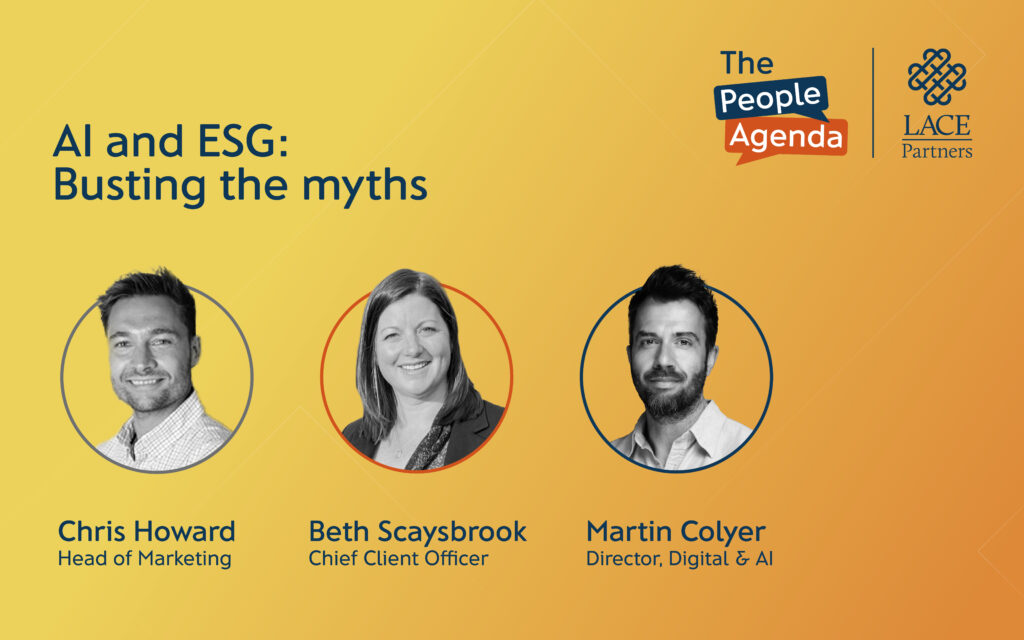
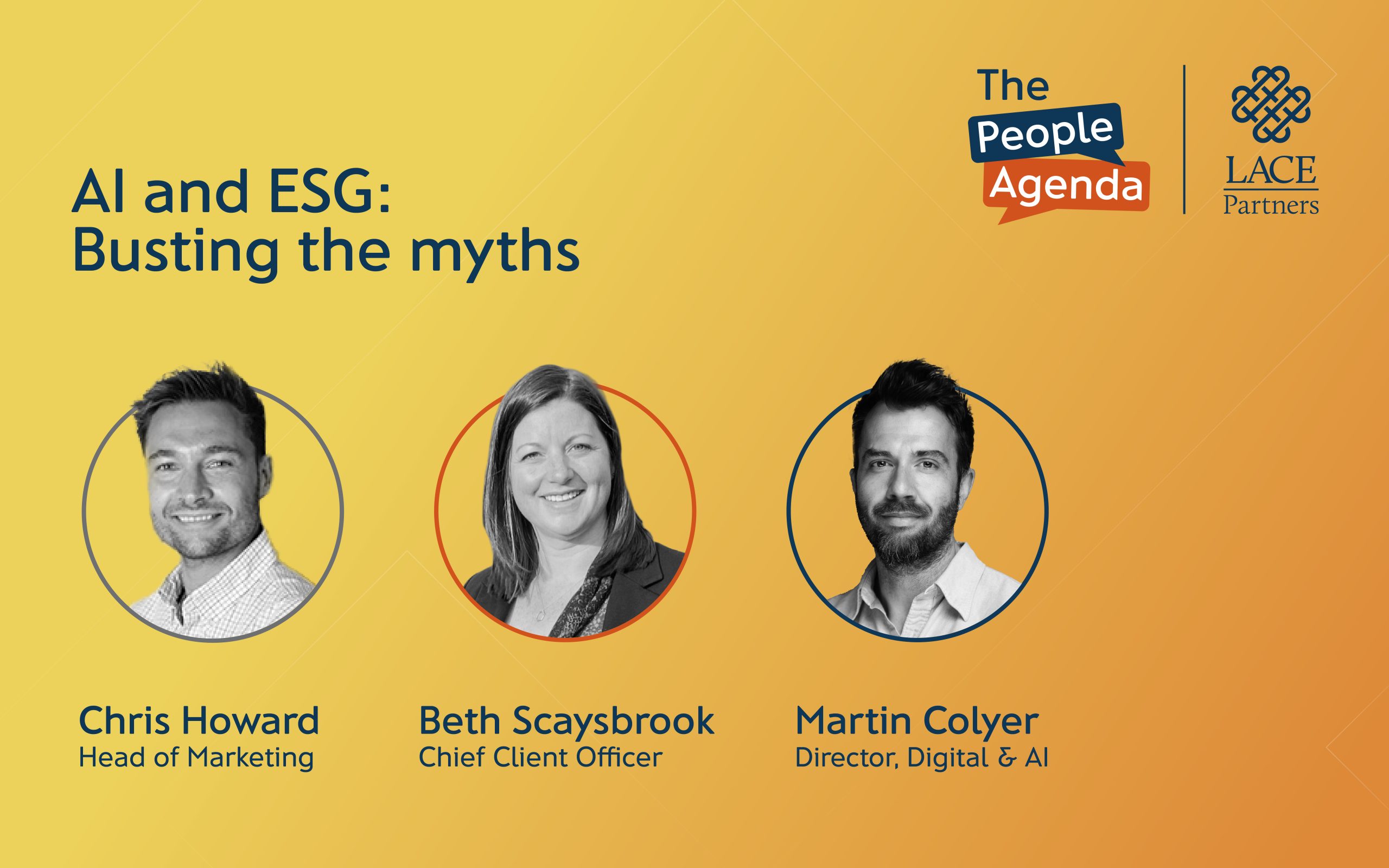
In our recent podcast with Beth Scaysbrook from Addidat, a leading ESG data and advisory firm, and our very own Martin Colyer, Director of Digital and AI here at LACE. Together they explore why the intersection of AI and ESG matters, the myths that often hold organisations back, and the practical steps leaders need to take to navigate this evolving landscape. From workforce transformation to ethical governance and sustainability, we uncover the realities behind the headlines, and what it means for businesses preparing for the future.
Myth 1: AI will replace most jobs
The fear that AI will lead to mass unemployment is widespread, but the reality is far more layered. AI is already reshaping the job market, particularly in entry-level and repetitive roles. However, both Beth and Martin emphasise that this is an evolution, not an extinction event. Technology has always changed the nature of work, think of the industrial revolution – but it also creates new opportunities and roles.
What does this mean for organisations?
- Reskilling and adaptability: Businesses need to invest in reskilling programmes and create a culture of adaptability. The jobs of tomorrow may not exist today, but new roles will emerge as AI opens up new possibilities.
- Strategic workforce planning: HR leaders should anticipate shifts in required skills and job functions to make sure their organisations remain competitive and resilient.
- Open dialogue: Transparent conversations about change can help reduce anxiety and build trust among employees.
Myth 2: AI has nothing to do with ESG
AI and ESG are deeply interconnected. The environmental impact of AI is significant, data centres powering AI models consume vast amounts of energy, contributing to carbon emissions. Social and governance factors are equally relevant, from privacy concerns to the ethical use of data and the need for robust risk frameworks.
Practical implications:
- Environmental impact: Organisations need to assess the carbon footprint of their AI operations, considering both direct and indirect effects. This includes energy consumption, water usage, and the sourcing of renewable energy.
- Social responsibility: AI can affect customer privacy, employee wellbeing, and societal trust. Leaders should make sure to have transparent data practices and consider the broader social implications of AI deployment.
- Governance: Establishing clear governance structures around AI is very important. This includes risk management, cybersecurity, and ongoing oversight to ensure responsible use.
Myth 3: AI is too risky to use in HR
AI in HR brings both opportunities and risks. Concerns about bias, transparency, and data privacy are valid, but they can be managed with the right approach. AI can help reduce human bias in recruitment and performance management, but it must be implemented thoughtfully.
How to approach this:
- Governance and vendor transparency: Work closely with technology vendors to make sure there is transparency in AI models and decision-making processes.
- Balanced automation: Use AI to support, not replace, human judgement. For example, AI can assist with task allocation or performance reviews, but final decisions should involve human oversight.
- Employee communication: Clearly explain how AI is used in HR processes, addressing concerns and highlighting benefits.
Myth 4: AI will increase our carbon footprint, so it can’t be sustainable
AI does have an environmental cost, but the picture is complex. Data centres already account for a significant share of national electricity usage, and this is set to rise. However, AI can also drive efficiencies and reduce waste when deployed strategically.
What organisations can do:
- Lifecycle assessment: Evaluate the full lifecycle impact of AI, not just headline energy consumption. Consider where AI can reduce duplication and streamline processes.
- Practical policies: Implement policies to centralise data processing and avoid unnecessary repetition, such as producing one meeting summary for all rather than multiple individual versions.
- Continuous improvement: Monitor and optimise AI usage to minimise environmental impact, using data to inform decisions.
Myth 5: Employees don’t want AI in their workplace
Employee attitudes towards AI vary widely, influenced by sector, role, and organisational culture. Some industries are understandably cautious, especially where privacy is paramount. However, resistance often stems from a lack of understanding or poor communication.
Key actions:
- Stakeholder engagement: Involve employees in the AI adoption journey, making sure to seek regular feedback and address any concerns.
- Clear communication: Explain the rationale for AI adoption, focusing on empowerment rather than enforcement.
- Sector sensitivity: Tailor AI strategies to the specific needs and risks of your industry.
Myth 6: AI decision-making is too complex for boards or investors to oversee
AI is complex, but effective oversight does not require technical expertise. Boards and investors should focus on asking the right questions, understanding risks and opportunities, and making sure to have strong AI governance.
Best practices:
- Critical thinking: Boards should challenge assumptions, seek clarity, and demand data-driven insights.
- Governance frameworks: Establish clear accountability for AI decisions, with documented processes and risk management protocols.
- Focus on material impact: Prioritise the most significant processes and decisions, using data to cut through perception and focus on reality.
Myth 7: AI skills are completely new and separate
While AI introduces new technical skills, such as prompt engineering, the importance of human skills like critical thinking, collaboration, and adaptability is greater than ever. AI is a tool to amplify human strengths, not replace them.
Organisational priorities:
- Training and development: Invest in both technical and soft skills across all levels of the organisation.
- Leverage junior talent: Younger employees often bring digital fluency and fresh perspectives; involve them in AI initiatives.
- Ongoing support: Provide continuous learning opportunities to keep pace with technological change.
Myth 8: Neuroscience shows AI makes people lazy and forgetful
There is a risk that over-reliance on AI could erode some skills, but the solution is to use AI wisely. AI should be a thought partner, supporting, not supplanting, human intelligence.
Recommendations:
- Encourage critical thinking: Teach employees to challenge AI outputs, fact-check, and maintain healthy scepticism.
- Balance automation: Use AI to streamline tasks but make sure that humans remain engaged in decision-making and problem-solving.
- Continuous learning: Create a culture of curiosity and lifelong learning to keep skills sharp.
Conclusion: Turning myths into action
AI and ESG are not separate agendas, they are deeply connected, and both are essential for building resilient, future-ready organisations. The most successful leaders will be those who stay curious, communicate openly, and focus on both risks and opportunities.
If you’d like to explore how LACE Partners can help your organisation navigate the intersection of AI and ESG, get in touch with our team.