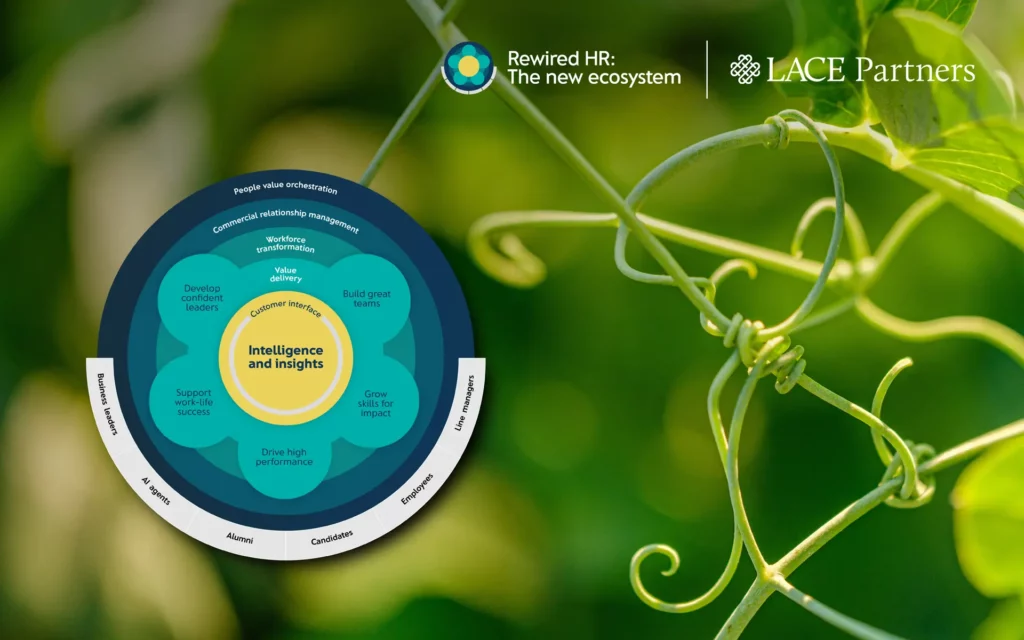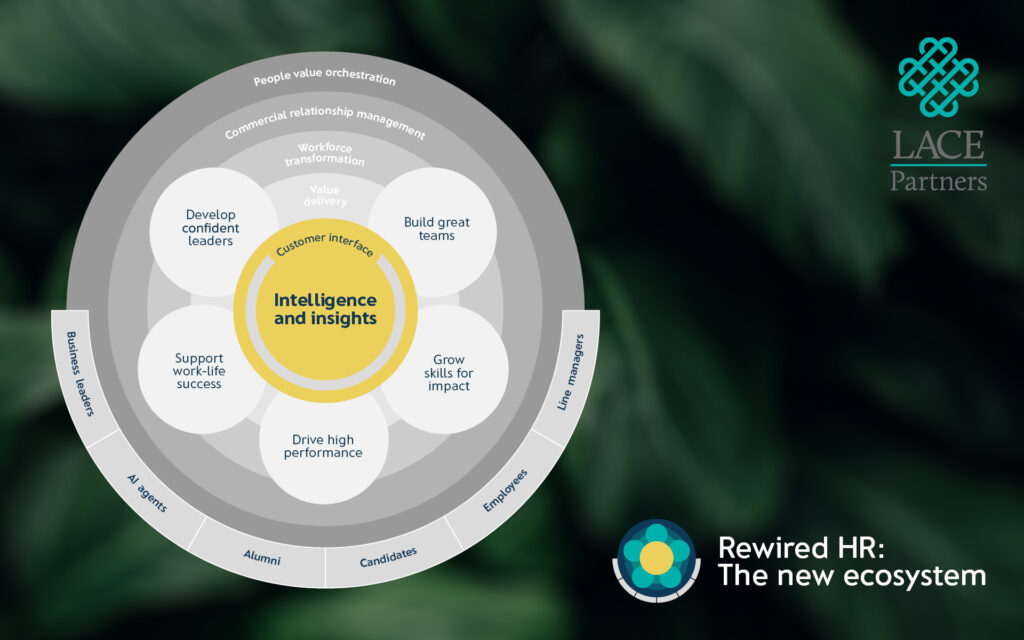

In the world of HR transformation, we often talk about the ‘new age’ of productivity. We discuss how Generative AI and automated workflows are removing the administrative overhead of the back office, allowing HR services to evolve from transactional centres into strategic engines. Indeed, the role AI plays in our latest campaign – Rewired HR – is a core component part of why organisations need to think about their future HR ecosystem and how operating models need to constantly evolve. However, as we accelerate into this digital future, it is unfortunately impacting the psychological safety and mental wellbeing of the workforce.
Following a recent media enquiry we had at LACE, we have been thinking about the question: What is the psychological toll of AI automation on the people tasked with using it?
At LACE, we believe that for any technology to be successful, it must be adopted with a “people-first” lens. If we ignore the impacts to the workforce cast by automation, the fear, perceived threat, and the resulting anxiety, we risk building a high-tech infrastructure on a very fragile human foundation (for further reading on how to ensure you have a seamless HR technology journey you can also check out our Less stress HRIS series here).
The rise of AI anxiety: More than just ‘change fatigue’
While many early adopters are excited by the prospect of upskilling, there is a significant and growing subset of the workforce experiencing what psychologists and industry commentators are calling “AI anxiety.” Unlike traditional change fatigue, this is larger than learning a new system, it is deep rooted and existential. It is the perceived threat that one’s skills, experience, and professional identity might be rendered obsolete by a set of algorithms.
Left unaddressed, this anxiety doesn’t stay a “private worry.” It manifests in very tangible ways: reduced motivation, difficulty concentrating, and a general withdrawal from collaborative work. In the UK, where the CIPD has long highlighted the link between mental health and workplace performance, the rise of AI-related stress is becoming a critical agenda item for CHROs.
When workers feel that a “ghost in the machine” is waiting to take their place, they stop innovating. They stop taking risks. They stop being the high-performing talent that the organisation spent years recruiting.
The snowball effect: Why this is a business risk
It is a mistake to view AI anxiety solely as an individual mental health issue; it is an organisational risk. When a workforce is gripped by the perceived threat of automation, the culture can start to erode.
We see this as a “snowball effect.” What begins as a quiet undercurrent of worry in one department can lead to:
Erosion of psychological safety: High-performing teams depend on the freedom to fail and the security of their roles. AI anxiety destroys that safety, leading to “presenteeism”, where people are physically there but mentally disengaged.
Increased absenteeism: The psychological toll of uncertainty often leads to burnout and stress-related leave.
The talent exodus: Paradoxically, it is often your most skilled workers, those with the most “transferable” skills who leave first if they feel their current role has no future. The cost of replacing that institutional knowledge is significantly higher than the cost of a proactive change management strategy.
From sentiments to solutions: How leaders are responding
The good news is that forward-thinking organisations are already recognising that AI is as much a “people challenge” as it is a technology one. They are moving beyond the standard mandate of “complete this online AI training” and are instead looking at the holistic wellbeing of the employee.
Take Cisco and Adidas, for example. Both have experimented with AI sentiment tools that monitor stress and engagement levels in real-time by analysing patterns in digital communications like chats and emails. While this requires a high degree of transparency and ethical handling, it allows managers to identify “hot spots” of stress before they escalate into full-blown burnout.
However, monitoring sentiment is only half the battle. You also must provide a physical and psychological “home” for growth. Salesforce has taken this a step further by introducing physical Global AI Learning Centres. By creating a tangible space for education, they are moving the conversation away from “the machine is taking your job” toward “here is your new workspace.” It grounds the abstract threat of AI in a supportive, human-centric environment.
The LACE perspective: A roadmap for empathetic automation
So, how do we combat the fear? At LACE, we often say that when change feels personal, the response must be deeply human. To navigate the psychological toll of AI, we suggest a three-pronged approach focused on honesty, inclusion, and clear paths.
1. Radical transparency (The ‘No-spin’ zone)
Top-down communication is your most valuable tool. Conversations about AI must be frequent, honest, and, most importantly: human. If a role is going to change, say so. If a task is being automated, explain why and what the human will do instead. When people are left in an information vacuum, they fill it with their worst fears. Clarity is the ultimate antidote to anxiety.
2. Move from ‘forced adoption’ to ‘collaborative co-creation’
The fear of AI is often a fear of loss of control. By involving employees in the design of the AI workflows, asking them which parts of their job are frustrating and could be automated, you return that sense of agency. When a worker helps “build the bot” that will assist them, the technology is viewed as a partner, not a predator.
3. Redefine ‘value’ beyond productivity
Organisations need to rethink what they reward. If we only reward speed and volume, things AI does better than humans, anxiety will remain high. If we pivot to rewarding empathy, strategic thinking, and complex problem-solving, we show our workforce that their “humanness” is exactly what makes them irreplaceable.
Building a future-proof workforce
The speed of AI advancement is startling, and it is natural for workers to feel a sense of trepidation. However, the goal of automation should be to augment the professional.
As we look toward the remainder of the 2020s, the organisations that will win the “War for Talent” aren’t necessarily the ones with the most advanced algorithms. They will be the ones that treated the AI revolution as a human transition. By acknowledging the psychological toll, maintaining honest communication, and creating clear paths for upskilling, we can ensure that AI becomes a tool for empowerment rather than a source of anxiety.
The future of HR and the wider business landscape is indeed automated, but it must remain, at its heart, a human enterprise.
At LACE Partners, we specialise in helping organisations navigate the complexities of HR transformation and change adoption. Whether you are looking to evolve your shared services or manage the human impact of new technology, we are here to help. Discover more of our insights here.