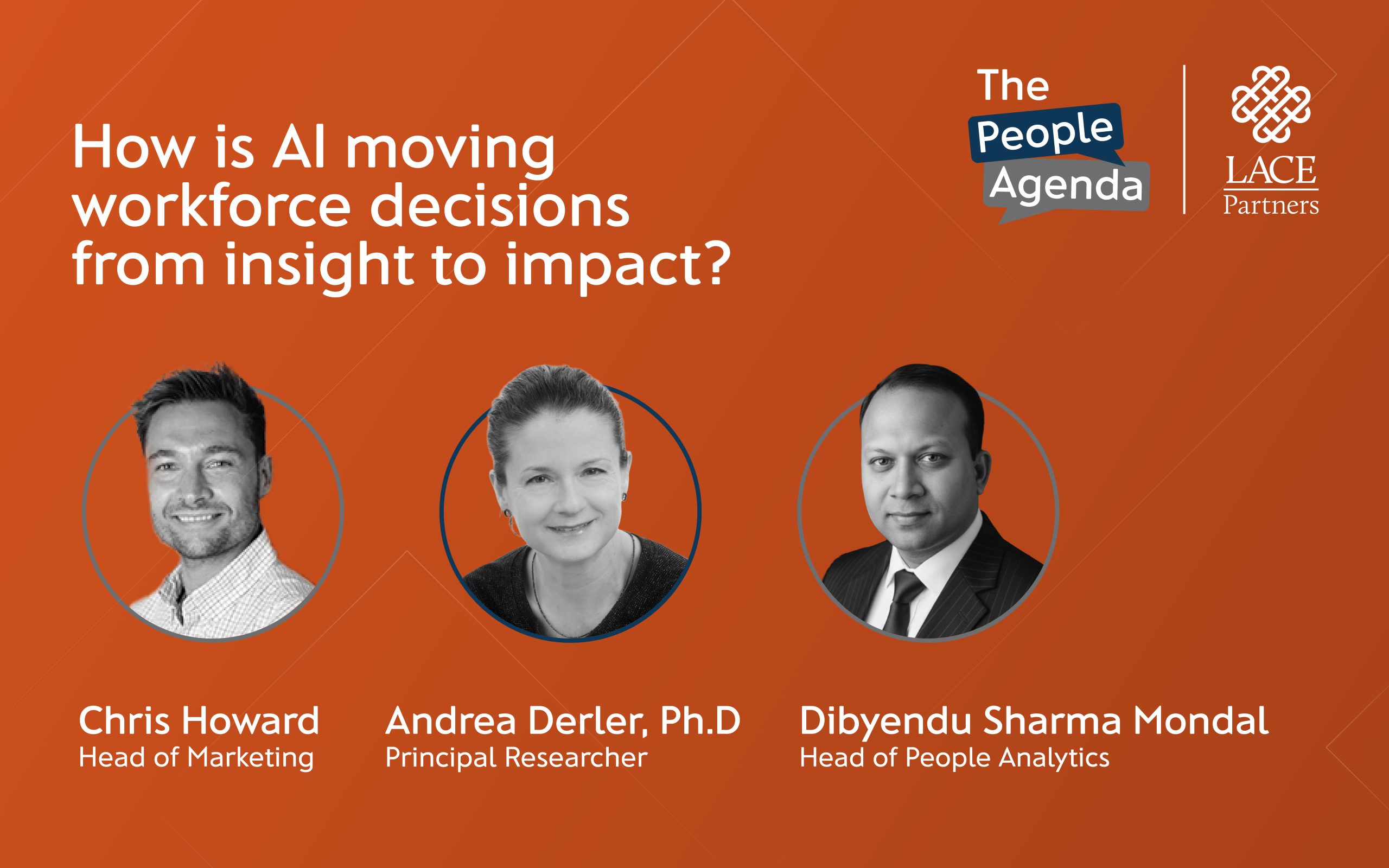
AI is no longer a future concept. It is already reshaping how organisations lead, plan, and compete. The real question is not whether AI will change the world of work, but who will lead that change.
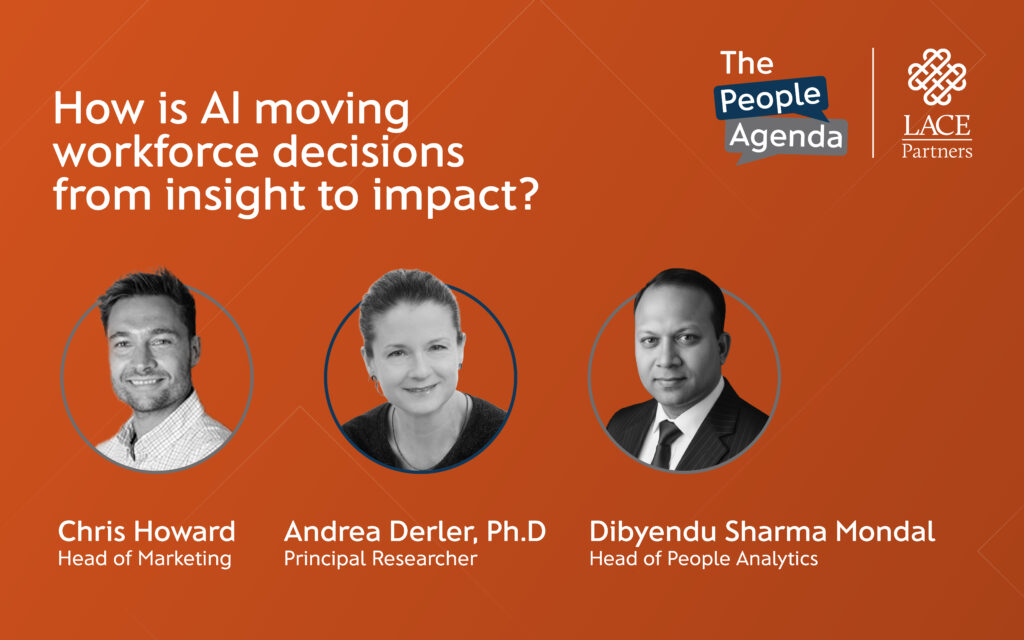
In this episode of The People Agenda podcast, we unpack Visier’s latest report, The Business Case for Humans in the AI Era, exploring five key trends that show why HR, powered by data and generative AI, is stepping into a central role in business transformation.
Host Chris Howard is joined by Andrea Derler, Principal Researcher at Visier, and Dibyendu Sharma Mondal, Head of People Analytics at Unisys. Together, they discuss how organisations like Unisys are using generative AI to augment human capability and drive better business outcomes.
What are the five workforce and AI trends leaders must act on?
The five essential trends focus on the critical role of managers, human-led AI, strategic workforce planning, democratised analytics, and a value-driven tech stack overhaul. These trends are based on an analysis of 25,000,000 employee records and thousands of hours of customer research. They include:
- Managers become more critical, not less.
- AI acts as second-in-command, not the decision-maker.
- Workforce planning shifts from optional to essential.
- Generative AI accelerates culture and data literacy.
- HR technology stacks are redesigned for value, not cost.
How is Unisys implementing AI to transform its operations?
Unisys is an early adopter of generative AI by using the Visier Vee platform to provide prescriptive, action-driven insights that empower business leaders to make real-time decisions. The company uses AI tools in different ways including:
- To get answers about revenue and cost elements directly through people data.
- Removes the need for manual data gathering and combination, allowing for immediate strategic dialogue.
How can AI support rather than replace humans?
Humans remain accountable for decisions; AI accelerates insight and execution. AI excels at pattern detection, summarisation, forecasting, and speed, while humans excel at judgement, ethics, context-setting, and accountability. In practice, this means:
- AI generates insights in seconds rather than weeks
- Leaders evaluate, challenge, and act on those insights
- Decision ownership stays with people, not algorithms
Why is workforce planning now a critical business capability?
Workforce planning has moved from a niche HR activity to a core strategic function. Effective workforce planning now requires:
- Skills inventories tied to future business strategy
- Scenario modelling for hiring, redeployment, and reskilling
- Integration of people data with financial and operational data
Without this, organisations risk building tomorrow’s strategy on yesterday’s workforce. Clearly mapping the skills of your workforce allows you to identify which skills are “sunsetting” or “sunrising”.
How does generative AI change the relationship between HR and business leaders?
Generative AI bridges the gap between technical data analytics and business leadership by removing the time-consuming barriers to obtaining insights. This technology allows HR to lead business-wide transformations rather than just focusing on HR-specific changes. The benefits of this are:
- Business leaders can access insights immediately through the system
- The ease of use provided by tools has prompted business leaders to proactively approach HR for people data
- Provides instant interpretation of charts, which helps HR professionals become better storytellers and business partners
- The intersection of people and technology is positioning HR as a primary driver of organisational transformation
- The tool helps overcome the traditional lack of data acumen among general business leaders by providing clear, prescriptive answers
Use our TRUSTED framework to ensure that AI implementation is a smooth process in your organisation.
Why are HR technology stacks under pressure?
The HR solution stack is under pressure as organisations increasingly demand consolidated systems that deliver a 360-degree view of the business, rather than siloed applications. Leaders are growing frustrated with “dark data”, information that is collected, stored, and processed but rarely used for analysis or decision-making, trapped in spreadsheets and fragmented HR systems. This data is difficult to access, integrate, or analyse, for the following reasons:
- Companies are reducing their footprint by moving away from using multiple different systems for multiple different processes
- New applications must integrate back into core systems to ensure all “dots” are connected for leadership
- Systems that only show talent demographics without linking them to business outcomes are considered insufficient
- The current shift prioritises a tool’s ability to help plan for 24 to 36 months of business needs over the lowest price point
What should leaders do next?
Leaders must treat AI-enabled people data as a strategic asset, not an HR tool. The next steps that should be on HR leader’s list are:
- Investing in manager capability alongside AI adoption
- Embedding workforce planning into business strategy cycles
- Reassessing HR technology based on decision value delivered
- Positioning HR as a driver of enterprise-wide transformation
If you want real-world insight into how these trends are already playing out, from Visier’s research to Unisys’ hands-on experience, listen to this episode of The People Agenda podcast. It goes beyond theory and shows what AI-led, human-first transformation looks like in practice. Interested in this topic? We were on a webinar with Visier discussing how HR teams can overcome capacity challenges to become key drivers of business change.