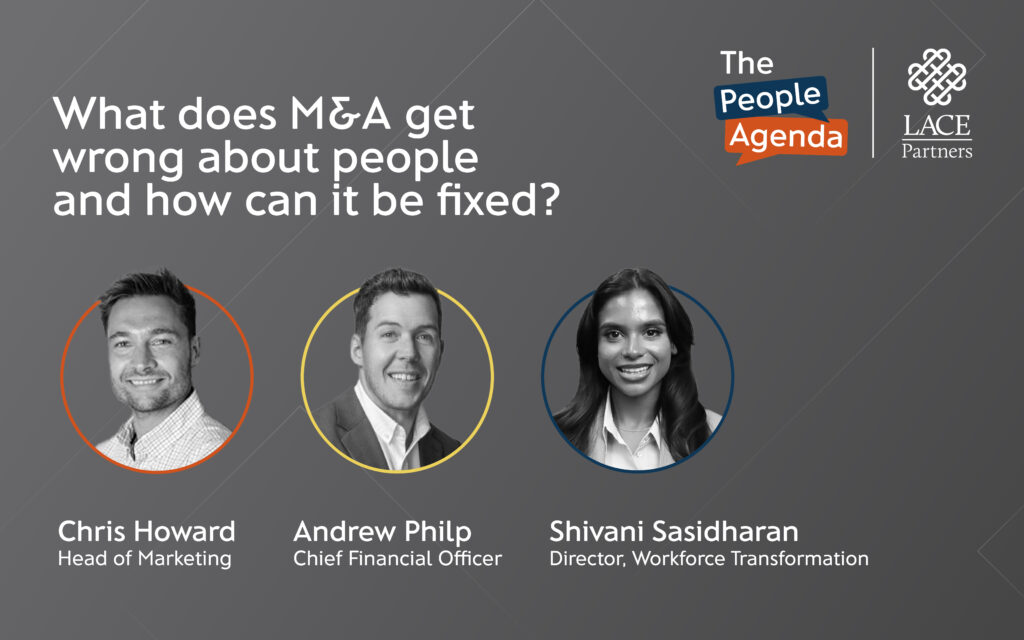
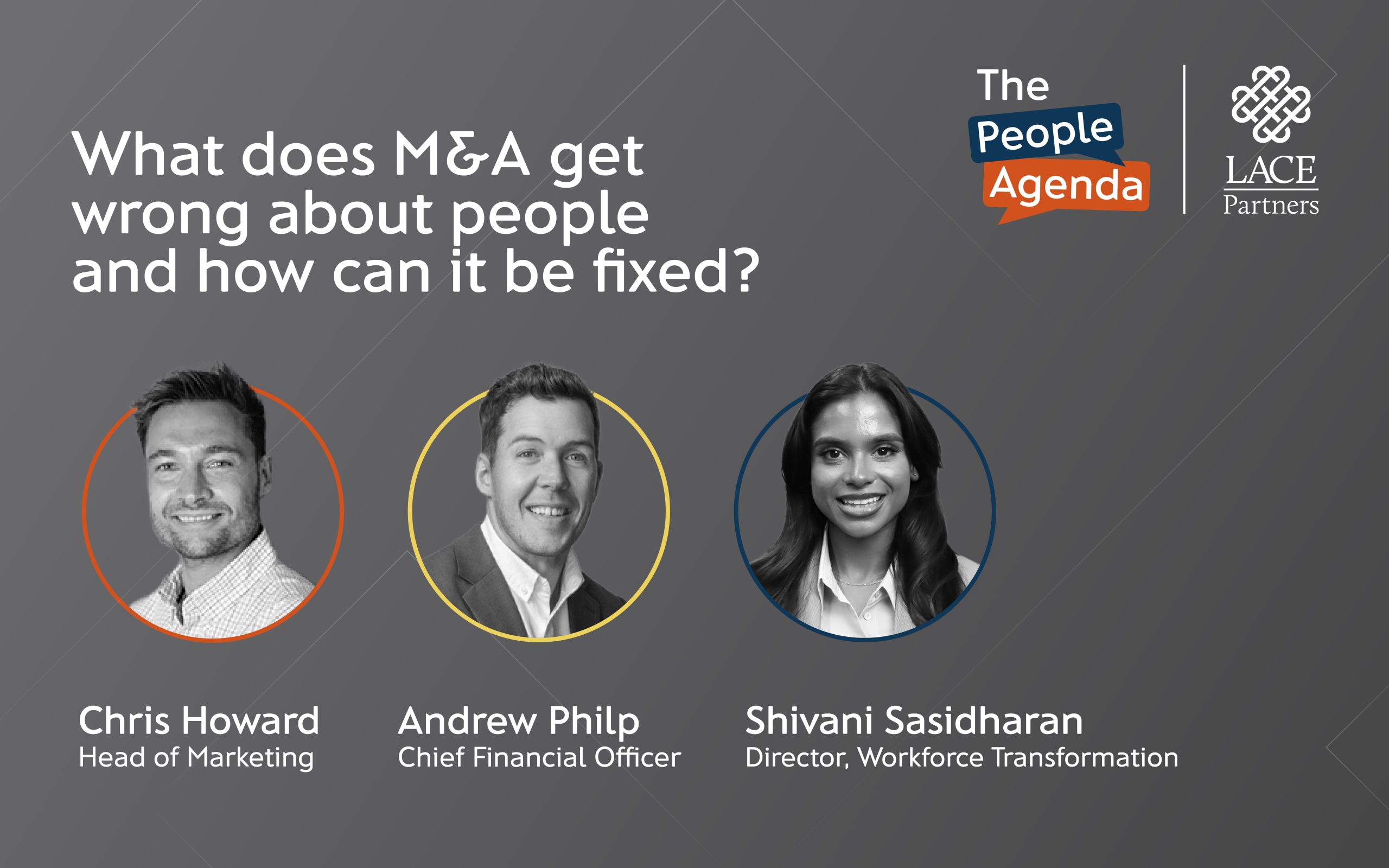
Mergers and acquisitions (M&A) deals fail less because of spreadsheets and more because of people. Most M&A promise growth, scale, or capability. Many underdeliver because leaders underestimate the human side of change. In this episode of The People Agenda podcast host Chris Howard and LACEr Shivani Sasidharan speak to Andrew Philp, CFO at activpayroll, as they break down what actually matters before, during, and after an M&A. activpayroll helps companies manage global payroll and mobility in a secure and compliant way. They also provide expert support in areas like tax, legal, immigration, onboarding, and local regulations.
What should organisations focus on before an M&A?
Clarity on why the deal exists is the single most important pre-M&A requirement. Before signing anything, organisations must be explicit about what they are buying, why they are buying it, and what success looks like in measurable terms. Shivani and Andrew discuss how you must:
- Clarify the deal rationale, including the growth you expect, the markets you want to reach, and the capabilities you’re aiming to add
- Validate the financial starting point with defined targets like revenue growth or cost savings
- Assess people risks early, including culture fit, leadership capability, and talent retention
- Identify integration costs and expected synergies with clear timelines, not assumptions
What matters most during the M&A process?
Fast, clear communication prevents anxiety and protects value during the deal. Once a deal is live, uncertainty spreads quickly. Silence creates fear, and fear reduces performance long before integration starts. You can mitigate this anxiety by:
- Checking that due diligence findings still back up the original deal rationale
- Prioritising communication speed to reduce rumours and employee anxiety
- Explaining what is changing, what is not, and when decisions will be made
- Keeping day-to-day operations steady to avoid service issues or dips in productivity
What determines success after the deal closes?
Integration succeeds when people come before systems and processes. Post-deal value is realised through execution, and execution is driven by people working together effectively.
Our guest’s advice was to focus on successful integration starts with establishing joint teams early on to build momentum and a sense of shared ownership. From there, prioritising cultural integration is key, particularly in cross-border acquisitions where differences can quickly slow progress if left unaddressed. Delivering quick wins within the first 90 days helps build trust and credibility, creating confidence that the integration is on track. Throughout the process, it’s also important to track progress closely to prevent value leakage between deal close and full stabilisation.
Why are people the hardest part of M&A?
People are the largest value driver and the least measured risk in M&A. Unlike systems or costs, engagement, trust, and leadership alignment are intangible but decisive. Avoid these pitfalls to ensure people stay central to the change:
- Poor communication increases attrition of critical talent within months
- Lack of leadership visibility reduces engagement and slows execution
- Cultural misalignment erodes productivity even when financial logic is sound
- Later HR and CPO involvement increases uncertainty and loses deal value
How should leaders measure people-related M&A success?
Employee engagement and performance stability are among the clearest indicators of a successful integration. While culture can feel intangible, its impact quickly becomes visible through measurable outcomes. This includes monitoring service delivery and customer results for any signs of performance dips or improvements. Tracking the retention of key talent during the first six to twelve months. Lastly, using broader business performance trends as leading indicators of overall engagement levels.
If you want practical, experience-led insight to ensure a smooth adoption M&A on the people side, listen to this episode of The People Agenda podcast and hear directly from Andrew and Shivani who share their experiences.