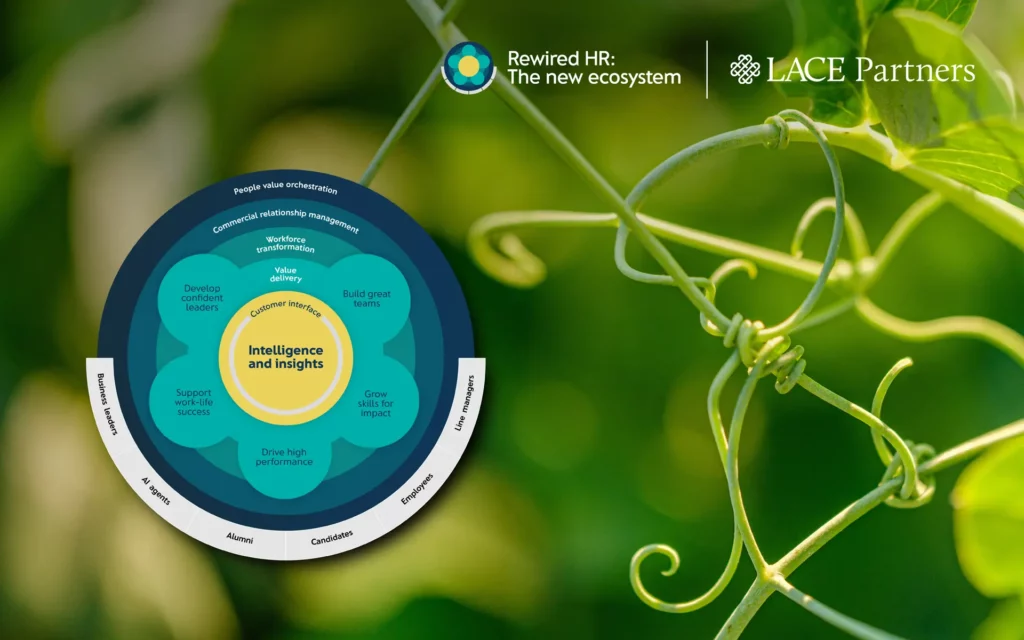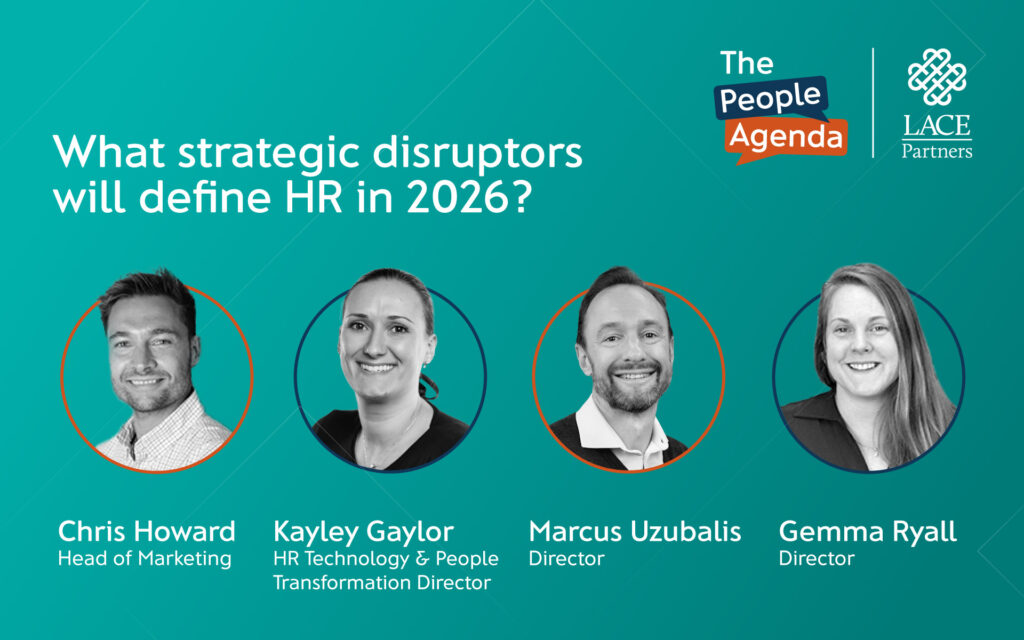
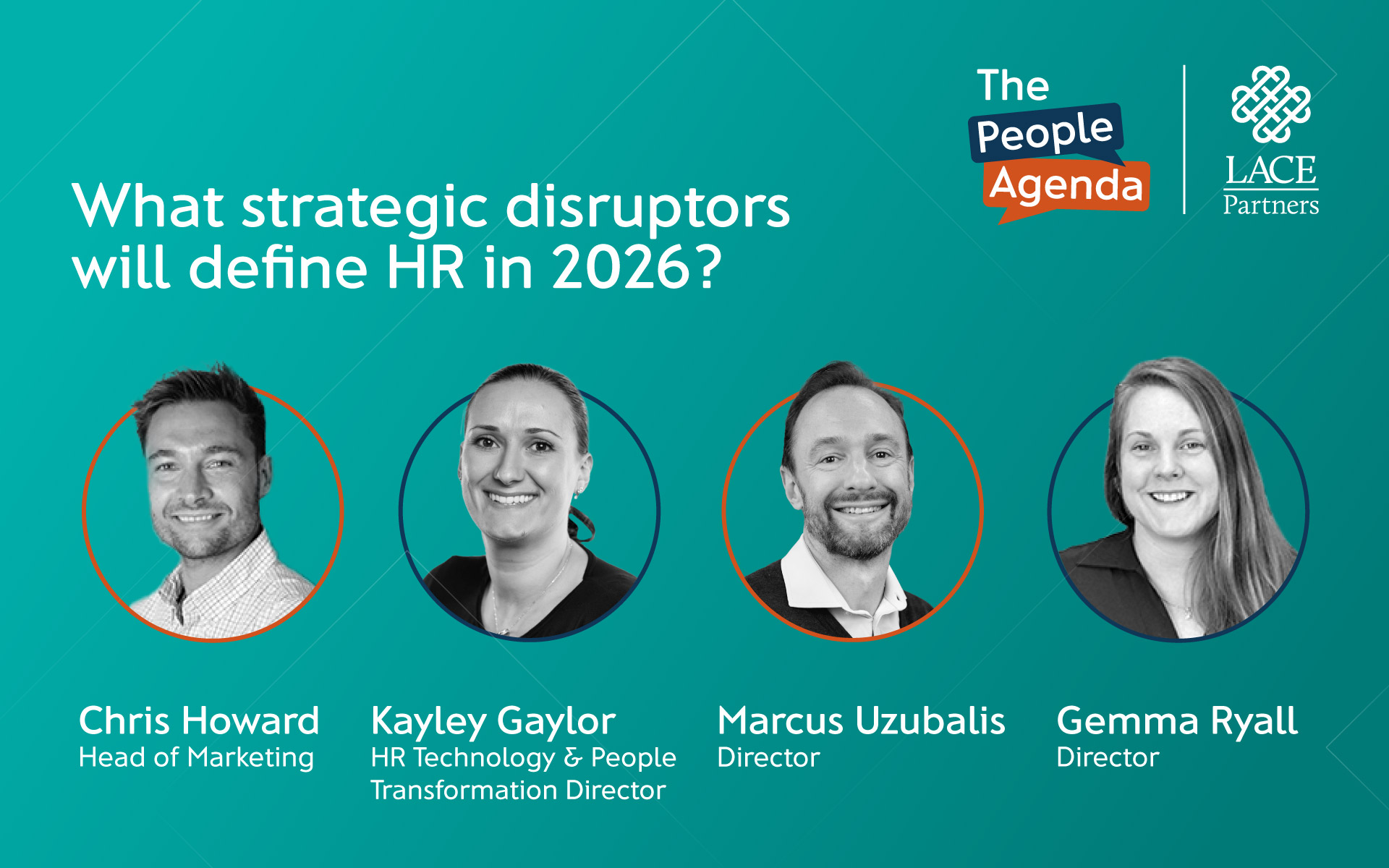
 HR leaders are being asked to deliver more strategic value at exactly the moment when uncertainty, cost pressure, and technology disruption are accelerating. In this episode of The People Agenda podcast host Chris Howard and fellow LACErs, Marcus Uzubalis, Gemma Ryall and Kayley Gaylor, discuss the strategic disruptors that the new HR ecosystem needs to adapt to.
What are the four strategic disruptors?
The four disruptors are AI, agility, data and analytics, and the human touch. Together, they determine whether HR moves from implementer to influencer.
These disruptors are a direct response to four structural challenges:
- Sustained geopolitical and economic instability
- Rising expectations on HR with flat or shrinking budgets
- Persistent doubts about HR’s strategic credibility
- Rapid advances in AI and digital technology
How is AI transforming the HR operating model?
AI is becoming a “teammate” that takes on administrative work, freeing HR teams to focus on higher-value strategic activity. To realise this shift, organisations must focus on four practical approaches:
- Use AI to reduce transactional workload and redirect HR effort toward strategic priorities.
- Prioritise a small number of high-value use cases to cut through market noise and deliver impact.
- Ensure people data is accurate, and processes are fit for purpose before scaling AI solutions.
- Apply clear governance to manage ethical, legal, and regulatory risk.
Why is agility considered a strategic disruptor for HR?
Agility is essential for HR to respond quickly to economic and geopolitical uncertainty and to stay aligned with rapidly changing business priorities. This challenge shows up in three clear ways:
- Leading organisations are forming cross-functional consulting pools to break down silos and respond faster to change.
- HR must operate at the same speed as the business, not as a downstream support function.
- Without agility, HR risks falling behind shifting organisational priorities and losing influence.
Why are data and analytics still a weak point for HR?
Data analytics needs to shift HR from reporting historical facts to predictive storytelling and evidence-based forecasting. To make this happen, organisations must address these challenges:
- Technology and AI now enable predictive forecasting and modelling to address future business challenges.
- How can HR move beyond simple reporting to tell a compelling story that influences business strategy.
- Capability should be built through on-the-job training in small, manageable “chunks”.
What role does the “human touch” play in a tech-driven HR future?
The human touch remains essential because empathy, judgement, and ethical oversight cannot be automated. As technology reshapes HR, this ‘human-in-the-loop’ capability becomes even more critical in three areas:
- Leaders need empathy and resilience to support people through rapid organisational change.
- Human judgement is required to prompt AI effectively, interpret its outputs, and manage ethical risks.
- HR professionals must adopt a continuous learning mindset as the lifespan of skills continues to shorten.
What should HR leaders do now?
To keep pace with these strategic disruptors, HR leaders should focus on the following steps:
- Identify where AI can release measurable capacity within HR
- Simplify processes and clean data before scaling AI
- Redesign HR operating models for speed and flexibility
- Invest in analytics capability and storytelling skills
- Protect and strengthen the human elements of leadership
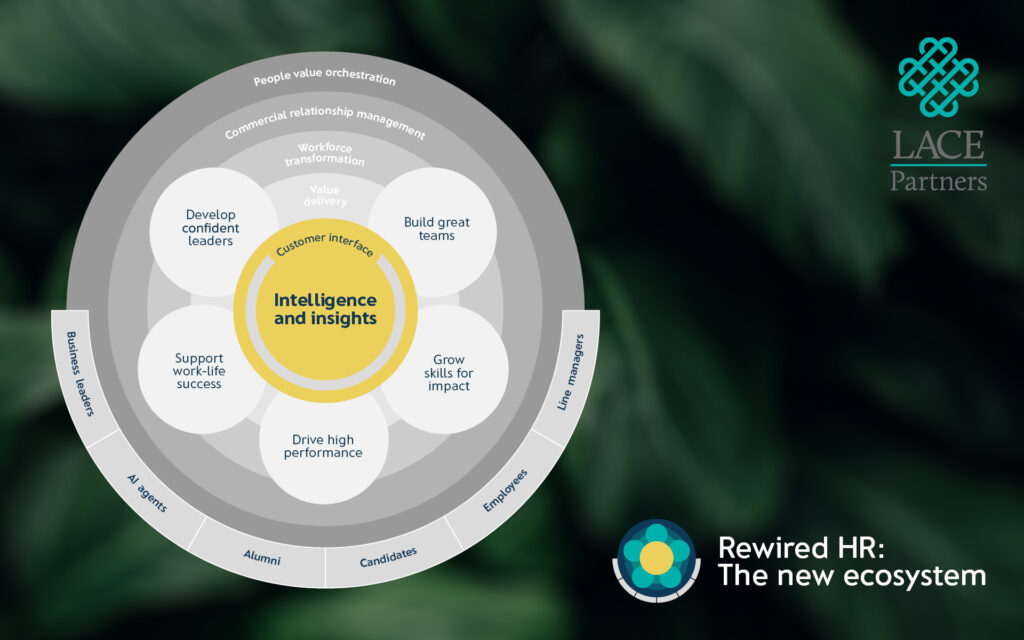
If you want to hear the nuance behind these disruptors, and how HR leaders can practically respond, listen to this episode of The People Agenda podcast. Want to know how you can rewire HR for the ever-changing business landscape of today join our campaign, Rewired HR.