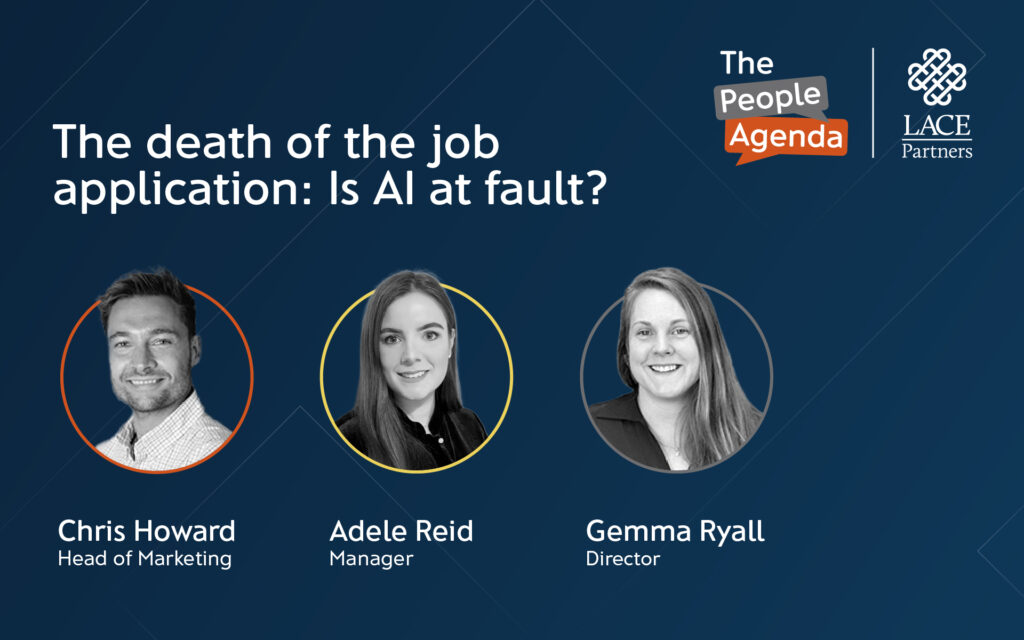
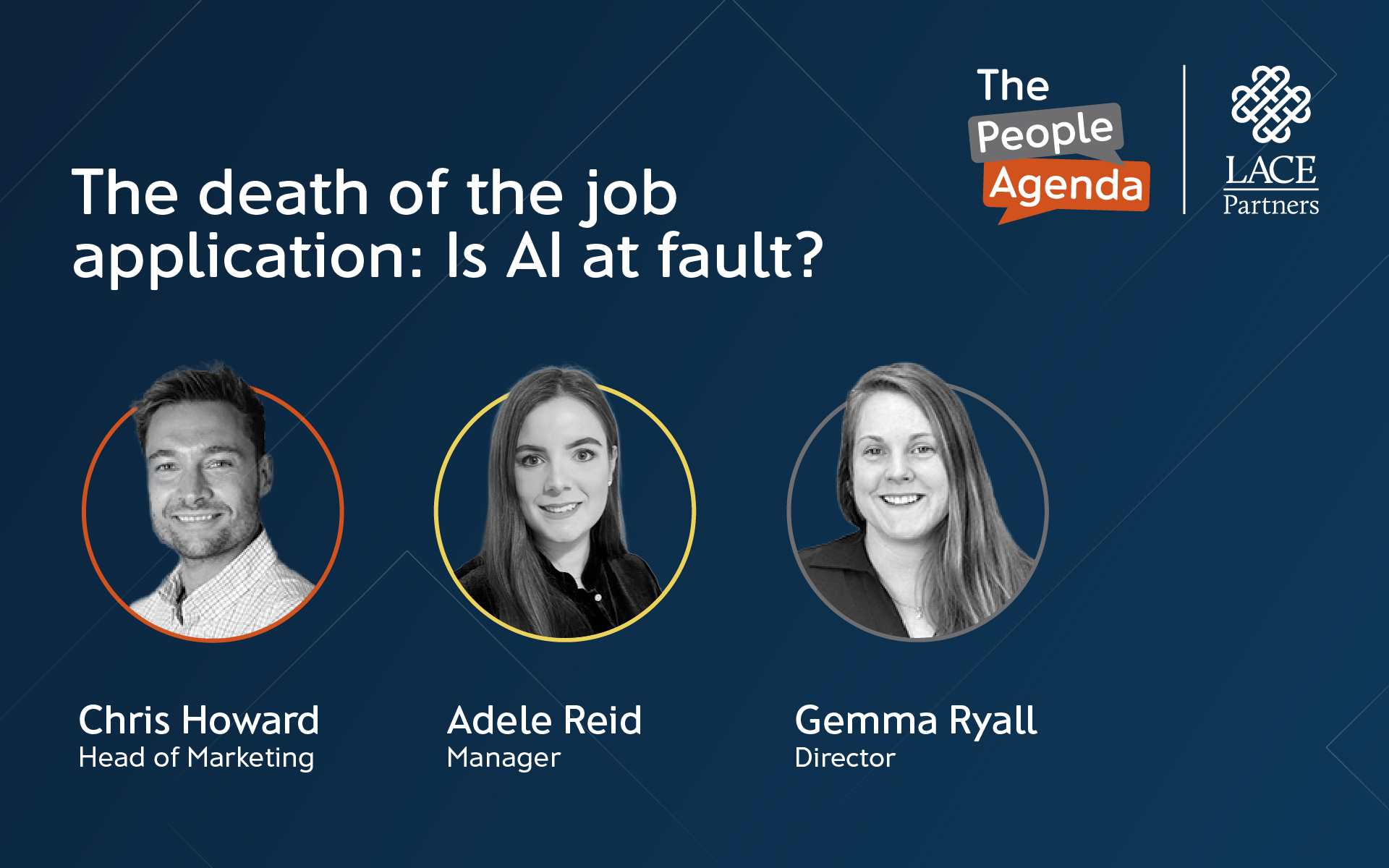
AI is flooding hiring pipelines with polished look-alike applications, and recruiters are struggling to tell real capability from well-written automation. Inspired by an article in The Economist titled “Job applicants are winning the AI arms race against recruiters”. In this episode of The People Agenda podcast host Chris Howard and fellow LACErs Gemma Ryall and Adele Reid break down how the job application is evolving, what signals are losing value, and how employers can redesign hiring to stay fair, fast, and human.
Is the traditional job application dead?
The traditional application process is not dying, but it is undergoing an evolution. Gemma and Adele acknowledge organisations still need structured filtering when handling thousands of applicants, but this is leading to a reliance on technological screening over manual sifting. This evolution has been building for 20 years, with AI now serving as the primary catalyst for changing how talent acquisition functions operate.
How should companies balance AI and human interaction?
Organisations should use AI for speed and consistency in early stages, then introduce human interaction at critical evaluation and relationship-building points. Candidate experience drops sharply if no real person appears before final decisions.
Organisations can achieve this balance by:
- Using AI for initial screening, scheduling and structured questioning
- Adding humans during shortlist interviews, culture conversations and final decisions
- Providing clear disclosure about where AI is used in the process
- Ensuring at least one live interaction before offer stage
What warning signs suggest an application is AI-generated?
Recruiters can identify AI-generated content by spotting technical formatting errors and repetitive linguistic patterns; specific “AI-isms”. Adele notes that red flags include the distinctively long dashes often found in GPT-generated text and over-capitalised titles in headers. Bullet points in fraudulent CVs often start with repetitive verbs like “achieved” or “prioritised” without providing the concrete, specific results a human would naturally include. Furthermore, AI-generated blogs and cover letters frequently open with generic phrases regarding “challenging economies” or “businesses being faced with” specific obstacles.
What must organisations do to stay effective as AI use grows?
Organisations must treat recruitment as an adaptive system that is reviewed and updated quarterly, not annually. Talent teams should work closely with AI and technology specialists to test tools for bias, fraud risk, and accuracy before scaling.
Onboarding should also validate that hired candidates can perform as expected. To stay ahead of the “AI arms-race” our experts suggest to:
- Run regular audits of screening tools for bias and false positives
- Train recruiters to spot AI-pattern language and missing specificity
- Build hiring steps that include live demonstrations of skill
- Use onboarding to confirm capability within the first 30–60 days
- Keep recruitment design aligned with labour market scarcity levels
To hear the full discussion on navigating the “AI arms race” in hiring and how your organisation can remain vigilant of recruitment fraud, listen to this episode of The People Agenda podcast.
If you’d like to discuss how to get the balance right between AI and human in your hiring process, we’d be happy to help. Simply reach out via the form below.