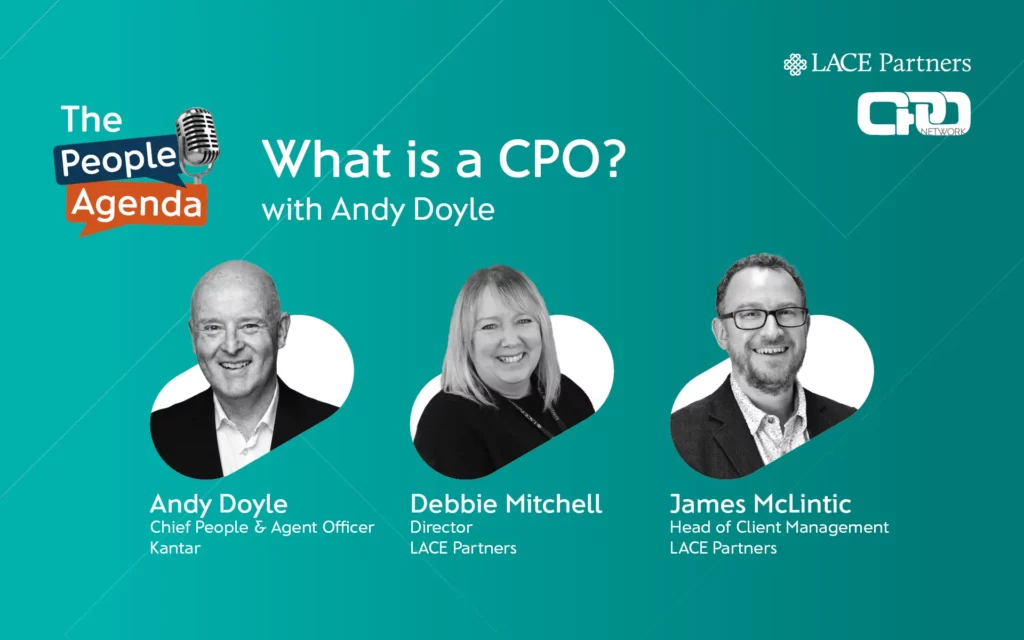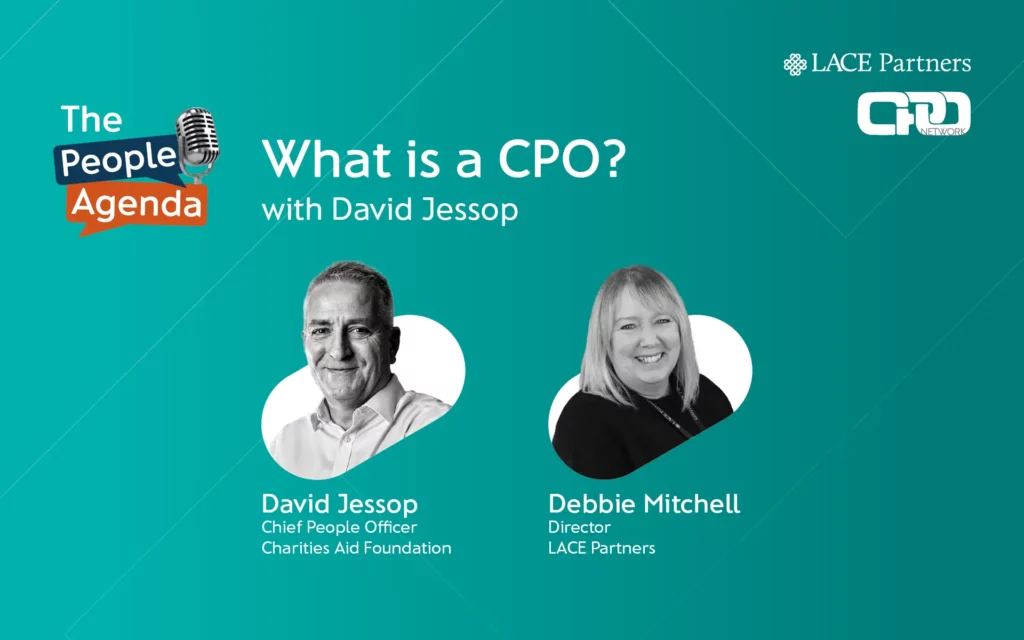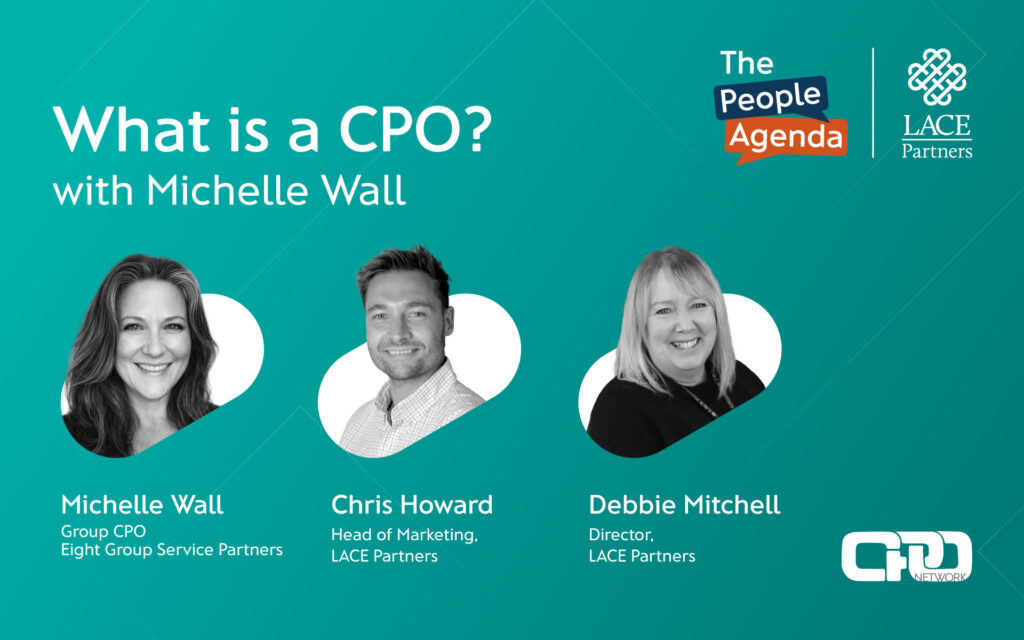
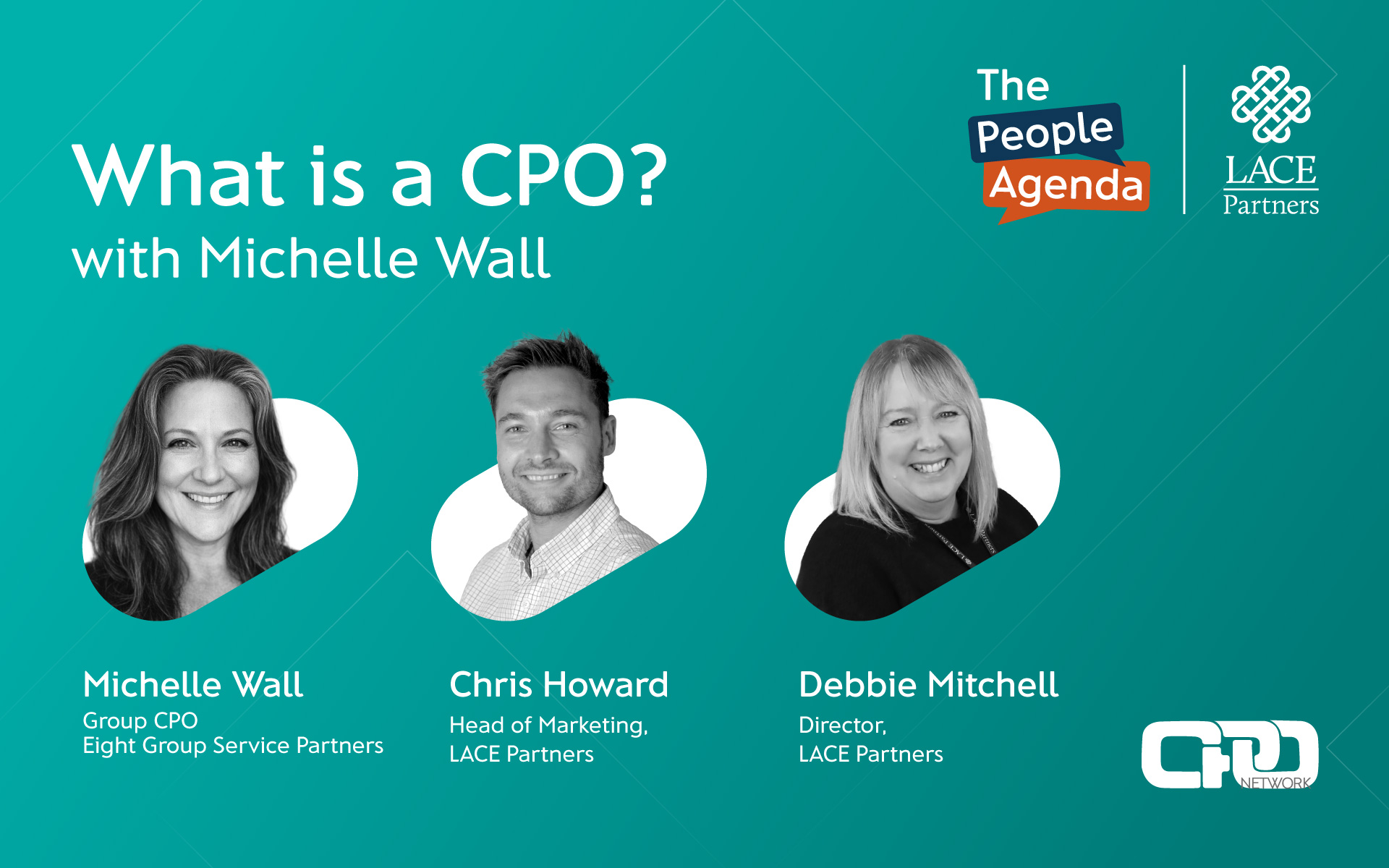
The role of the Chief People Officer has evolved far beyond traditional HR. In high-growth, private equity-backed businesses, today’s CPO is a commercial leader responsible for driving growth, enabling strategy, shaping culture, and creating the conditions for long-term business success. In this episode of The People Agenda podcast Chris Howard and Debbie Mitchell speak to Michelle Wal as she shares how modern people leadership is becoming a key driver of business value rather than a support function.
How is today’s Chief People Officer defined?
A CPO role is to make sure the people strategy supports the organisation’s growth, performance, and long-term success. By aligning people priorities with business goals, they help create the conditions for sustainable growth and stronger organisational performance.
This means shaping operating models that can scale with the business, improving the employee experience, and ensuring the organisation is set up to adapt and perform effectively. Increasingly, the CPO is seen not as a support function, but as a strategic leader who helps drive business value and outcomes.
How can HR move beyond being seen as a support function?
Michelle argues that HR earns its place at the leadership table by starting with business priorities, not HR priorities. They can start by:
- Building people strategies around business objectives.
- Participate in business strategy discussions from the outset.
- Use commercial language that resonates with senior stakeholders.
- Demonstrate how people initiatives contribute to growth and profitability.
- Position HR as an enabler of business outcomes rather than a policy owner.
How should CPOs communicate with Executive teams?
Michelle believes that CPOs should focus conversations on business outcomes and measurable value. To achieve this CPOs must:
- Connect people initiatives to growth, productivity, and profitability.
- Use board-level metrics such as Employee Net Promoter Score (eNPS).
- Highlight retention in critical roles that directly affect customer delivery.
- Frame discussions around organisational health and business performance.
- Adapt messaging to the audience while maintaining a commercial focus.
How can businesses preserve culture during rapid growth and acquisitions?
Successful growth preserves local culture while creating alignment around shared principles. To preserve their culture organisations should:
- Retain existing brands, customer relationships, and cultural identities.
- Introduce common values centred on a people-first philosophy.
- Implement a structured 90-day integration approach for new acquisitions.
- Reinforce cultural alignment through quarterly reviews and operating rhythms.
- Create consistency without imposing a one-size-fits-all culture.
What role do systems play in organisational growth?
Technology and systems provide the foundation for scalable growth and operational consistency.
- Introduces common platforms for scheduling, finance, contracts, and health and safety.
- Creates visibility into workforce data and resource planning.
- Improves service delivery and operational efficiency.
- Supports transformation through standardised processes.
- Delivers quick wins that help employees see immediate value from change.
What is the future of the CPO role?
The future CPO will need to balance technology, business leadership, and a deep understanding of people. As AI becomes a bigger part of how organisations operate, the role will be less about choosing between technology and people and more about bringing the two together effectively. CPOs will use AI to support better decision-making while ensuring human judgement, culture, and connection remain at the heart of the organisation.
They will also play an important role in helping HR professionals continue to develop the skills and expertise needed to add value in a changing world of work. Above all, the future CPO will remain focused on aligning people and business priorities, continuing the evolution of the role from a functional leader to a key driver of business success.
The modern CPO is no longer focused solely on people processes. The role has become a strategic leadership position that drives growth, supports transformation, strengthens culture, and helps organisations create lasting business value. If you want to understand how people leadership is shaping the future of business, listen to this episode of the People Agenda Podcast.