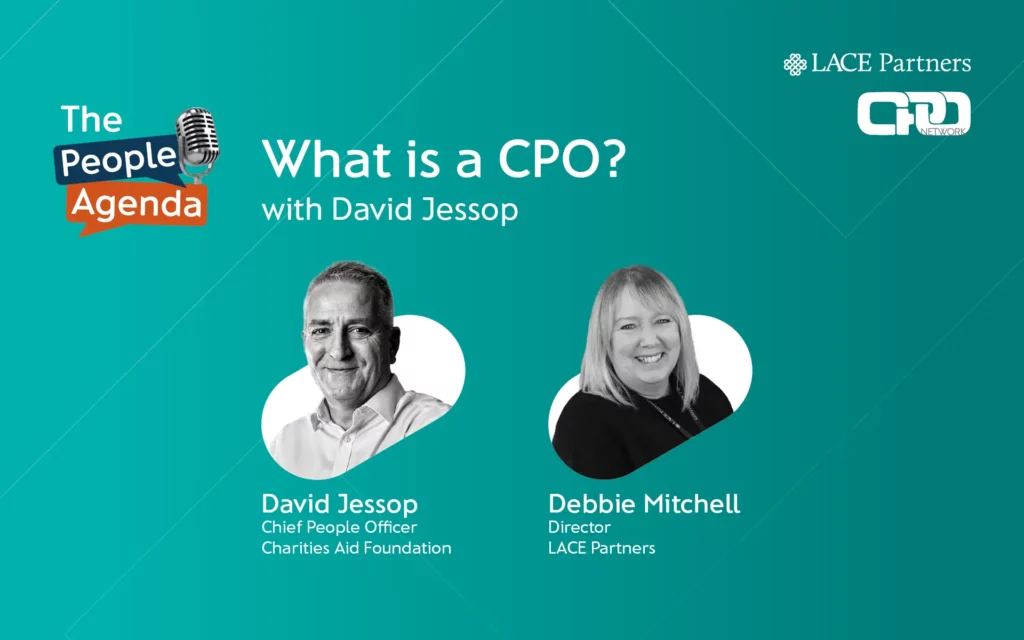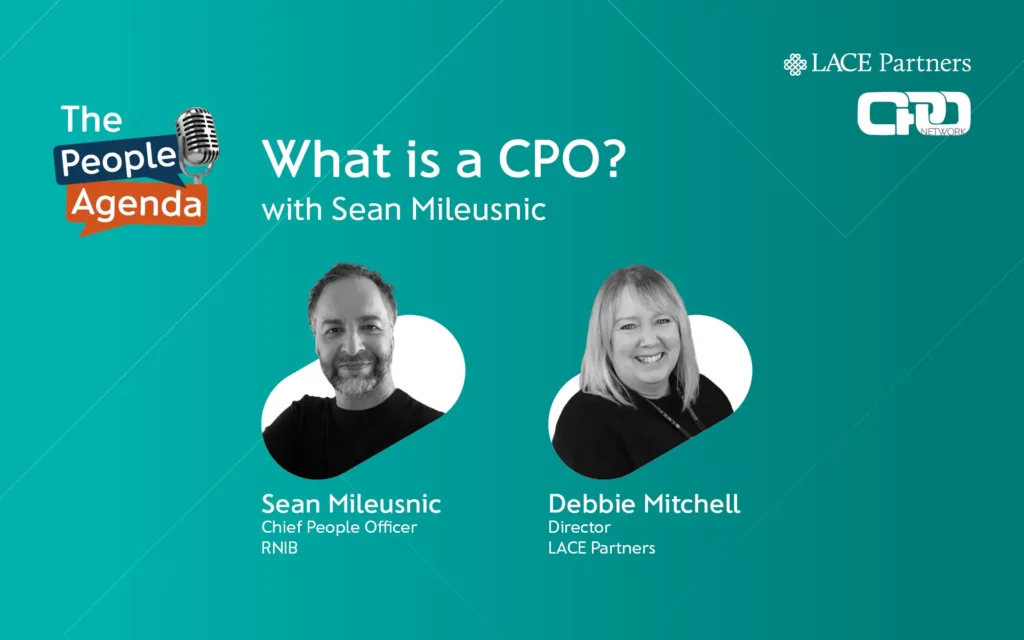
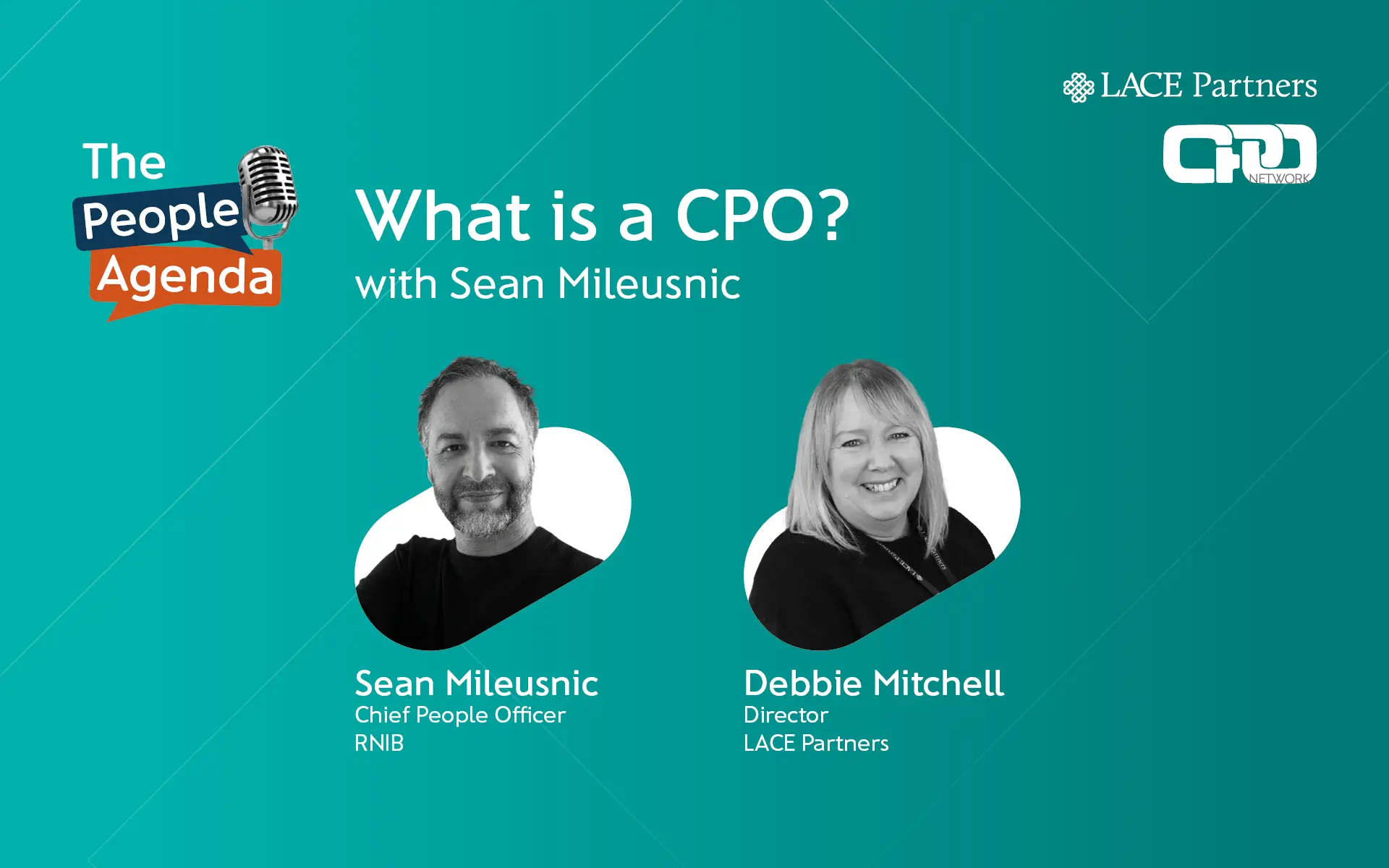
The role of the Chief People Officer (CPO) is evolving faster than ever. No longer focused solely on HR operations, today’s CPO is increasingly responsible for driving organisational transformation, shaping strategy, influencing culture, and helping businesses navigate complex change. In this episode of The People Agenda podcast, Debbie Mitchell speaks to Sean Mileusnic from the Royal National Institute of Blind People (RNIB) as he shares his perspective on what it means to be a modern CPO and why the role has become critical to organisational success.
What is a Chief People Officer?
A CPO is an enterprise leader first and a people leader second. While the role varies between organisations, every CPO plays a central part in connecting people, culture, strategy, and business performance. CPOs must be able to:
- Influence organisational direction alongside the CEO and Board
- Represent employee perspectives at executive level
- Oversee culture, organisational design, and workforce strategy
- Ensure core people processes operate effectively
- Adapt responsibilities based on organisational needs and context
How does a new CPO identify priorities?
Successful CPOs quickly balance urgent operational issues with long-term strategic goals. As Sean puts it, “you’re trying to manage that balance between… things that I urgently need to deal with… and the three to five key strategic things that are going to make a difference.” CPOs can achieve balance by:
- Conducting extensive due diligence before joining
- Meeting as many colleagues as possible during the first months
- Addressing immediate risks and operational challenges quickly
- Identifying three to five strategic priorities for long-term success
- Building plans that deliver both short-term stability and future growth
How does a CPO build the right team?
Building the right team requires an honest assessment of culture, capability, and future requirements. The goal is to retain strong talent, develop potential, and introduce new skills where needed.
- Evaluate current team structure and capabilities
- Retain high-performing individuals who fit future needs
- Develop employees willing to grow with the organisation
- Recruit specialist expertise where capability gaps exist
- Communicate future expectations transparently and early
Why is organisational development so important?
Organisational Development (OD) can play a key role when businesses are going through significant change. By building a dedicated OD capability, organisations can bring specialist expertise in areas such as culture, capability, engagement, and organisational design, helping to support transformation in a more focused way.
This not only strengthens the foundations for long-term organisational effectiveness but also helps businesses move more quickly on strategic priorities and deliver change more successfully.
What makes being a CPO in the charity sector different?
The charity sector presents unique challenges because decisions must balance commercial realities with social impact. Leaders often manage greater complexity, particularly around governance, accessibility, and stakeholder expectations.
- Work closely with trustee boards that are deeply connected to organisational purpose
- Balance financial sustainability with social responsibility
- Consider the impact of decisions on vulnerable communities
- Manage higher levels of accessibility and inclusion requirements
- Navigate complex decisions where ideal solutions may not exist
What do boards and CEOs expect from a CPO today?
Boards increasingly view the CPO as a strategic partner who helps organisations adapt, transform, and deliver results. The role has become more important as organisations face economic pressure and workforce challenges.
- Translate strategy into practical organisational action
- Shape organisational design and workforce structures
- Build engagement and support change initiatives
- Create compelling narratives that bring employees on the journey
- Help leadership teams make informed organisational decisions
How is the CPO role expanding?
The modern CPO role extends well beyond traditional HR responsibilities. Many organisations now place additional business-critical functions under CPO leadership. This shift is reflected in Sean’s perspective that “you’re an enterprise leader first and then you’re a functional leader second.”
- Lead transformation programmes
- Oversee internal communications
- Manage organisational research and future planning
- Take ownership of functions such as safeguarding or legal services
- Contribute directly to enterprise-wide leadership decisions
What is the future of the CPO role?
The future CPO will be increasingly strategic, helping organisations respond to volatility, disruption, and changing business models. The most successful leaders will understand how strategy, culture, operating models, and people systems work together.
- Lead organisational transformation at enterprise level
- Navigate increasingly complex and uncertain environments
- Connect purpose, strategy, culture, and organisational design
- Drive business model evolution and workforce readiness
- Play a larger role in executive decision-making
The Chief People Officer has evolved into one of the most influential roles in modern organisations. As businesses face growing complexity and change, the ability to align people, culture, and strategy has never been more valuable.
If you want deeper insights into how today’s CPOs are shaping organisations, leading transformation, and preparing for the future, listen to this episode of The People Agenda podcast.