What is a chief people officer? Stuart Price on the role, the tensions and the future
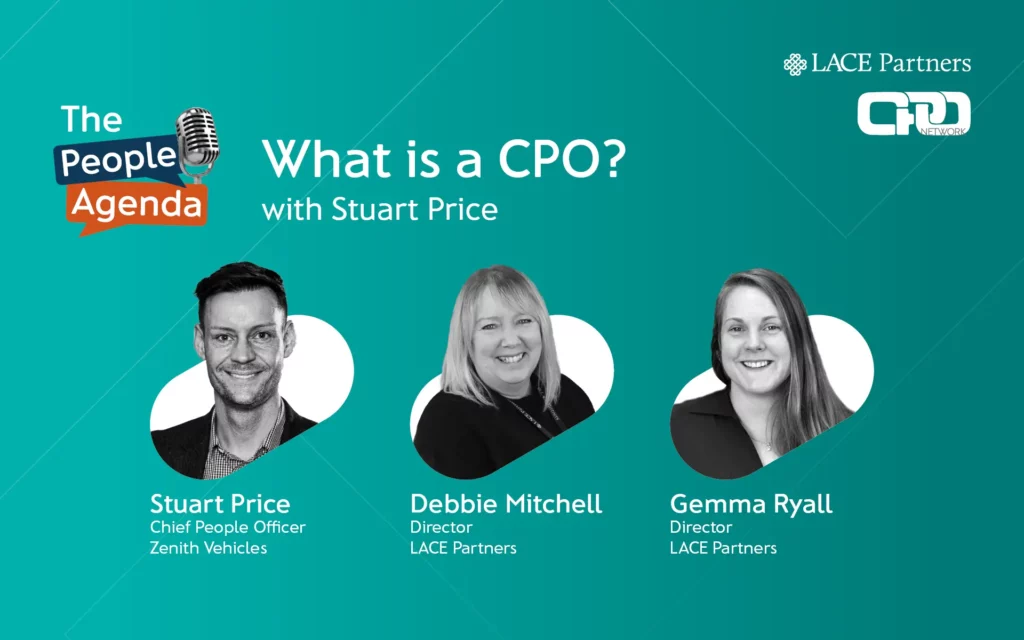
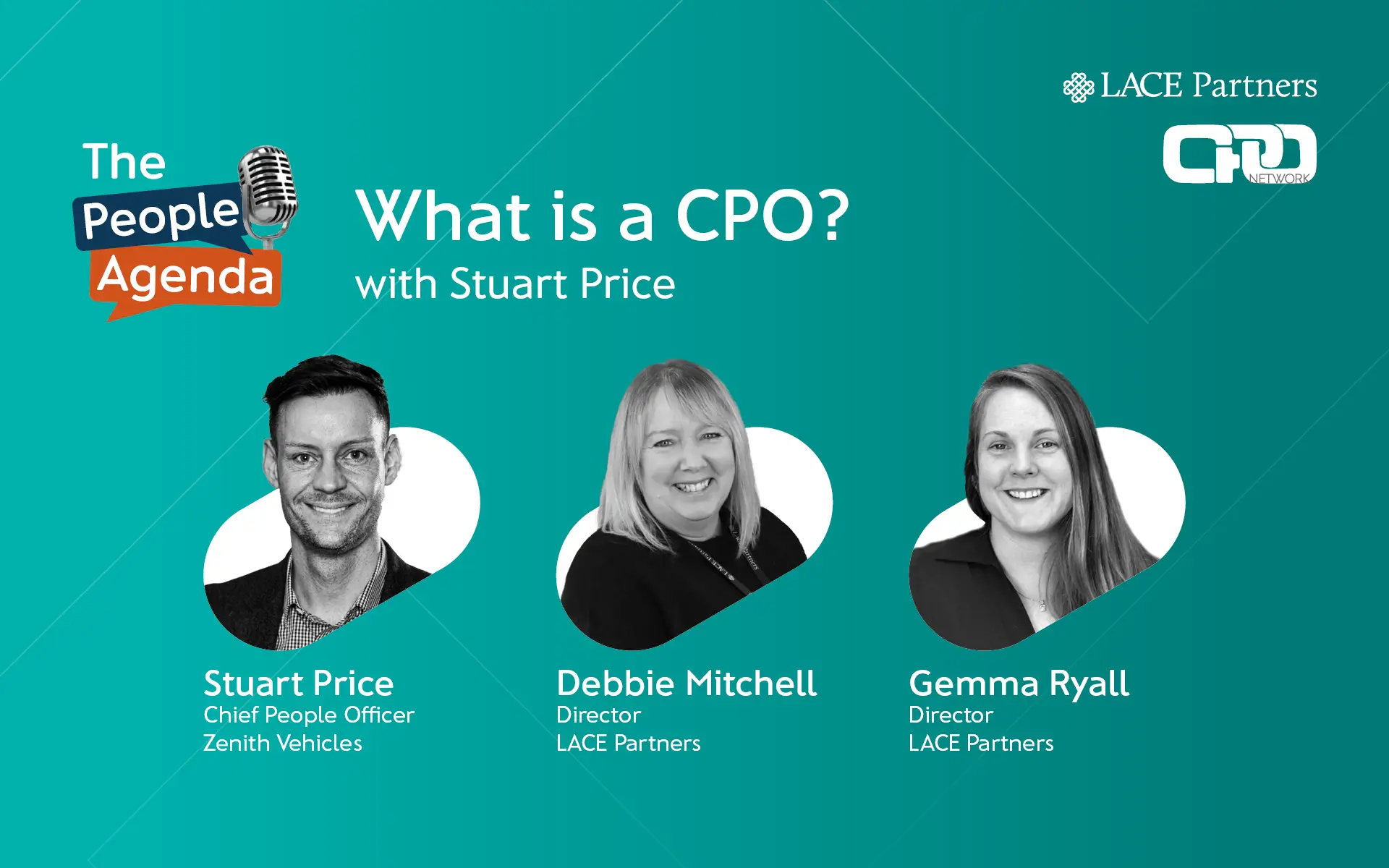
What does a chief people officer actually do? On this episode of the People Agenda Podcast, hosts Debbie Mitchell and Gemma Ryall put that question to Stuart Price, CPO at Zenith, the UK vehicle leasing business. Stuart’s career runs through food retail, healthcare and now automotive, giving him a rare cross-sector view of what the role really requires.
Listen to the episode:
A role with three layers
Stuart’s answer to “what is a CPO” starts with hierarchy. As he puts it, “you’re a director of the organisation” before anything else, then leader of the people function, then finally your own self-interest. Beneath that sits a constant tension: building performance and capability while also protecting culture. Stuart describes the most distinctive part of the role as being the conscience of the business, the person who can ask difficult questions without owning operational responsibility for the answer.
Earning the right to be heard
Getting the people agenda taken seriously at board level, Stuart argues, comes down to commercial credibility. He calls it your “licence to play“: if you can’t connect a people initiative to business and commercial impact, it won’t get through the boardroom door, whatever sector you’re in. Alongside that, he sets out three habits for building influence at Exco level: genuine empathy for other functions’ problems, refusing to stay in your own swim lane, and being honest when you don’t have all the answers.
Why the role keeps expanding
At Zenith, Stuart’s remit already covers product, marketing, transformation and comms, including investor relations, and he spent a year holding the technology function during a leadership change. His advice to other CPOs eyeing a broader remit: back yourself and put yourself forward, rather than waiting to be asked.
AI and the future of HR skills
Looking ahead, Stuart expects AI to take over much of the technical HR knowledge that professionals have spent years building, from employment law nuance to compliance detail. What won’t be replaced, he says, are communication, judgement, commercial acumen and the ability to build genuine relationships. His advice: don’t build a career on technical knowledge alone.
In brief
- A CPO is director of the enterprise first, leader of the people function second, self-interest last
- Commercial credibility is your licence to get the people agenda heard at board level
- AI will erode the value of technical HR knowledge, making judgement and communication the skills that count
Listen to the full episode to hear Stuart’s story about the stretch role he never thought he’d get, and why he believes CPOs should stop waiting to be asked.
Got questions about this topic, or want to be a guest on the show? Fill in the form below and we’ll get back to you.