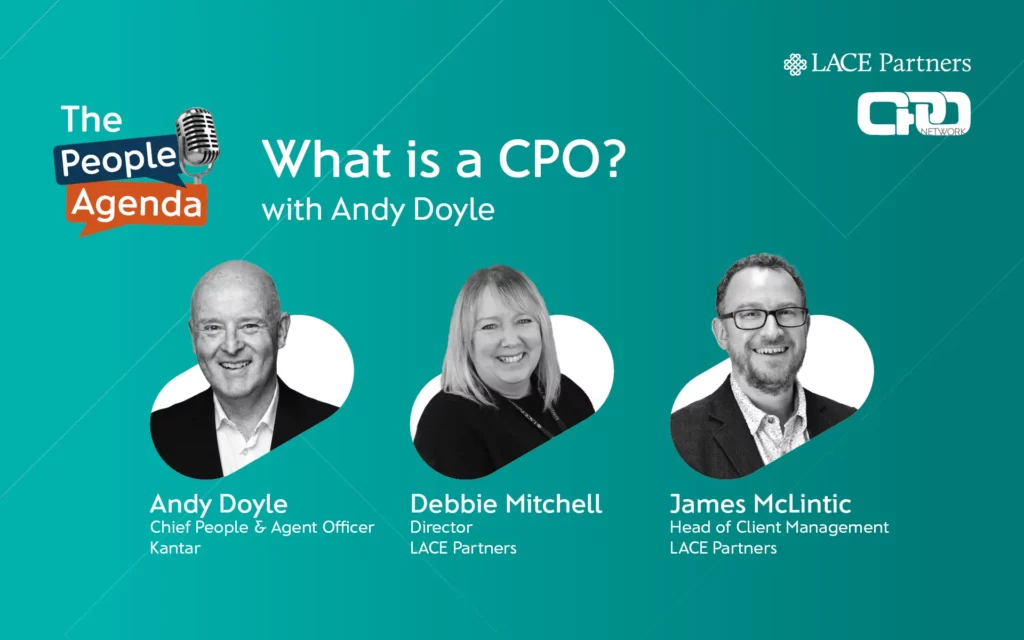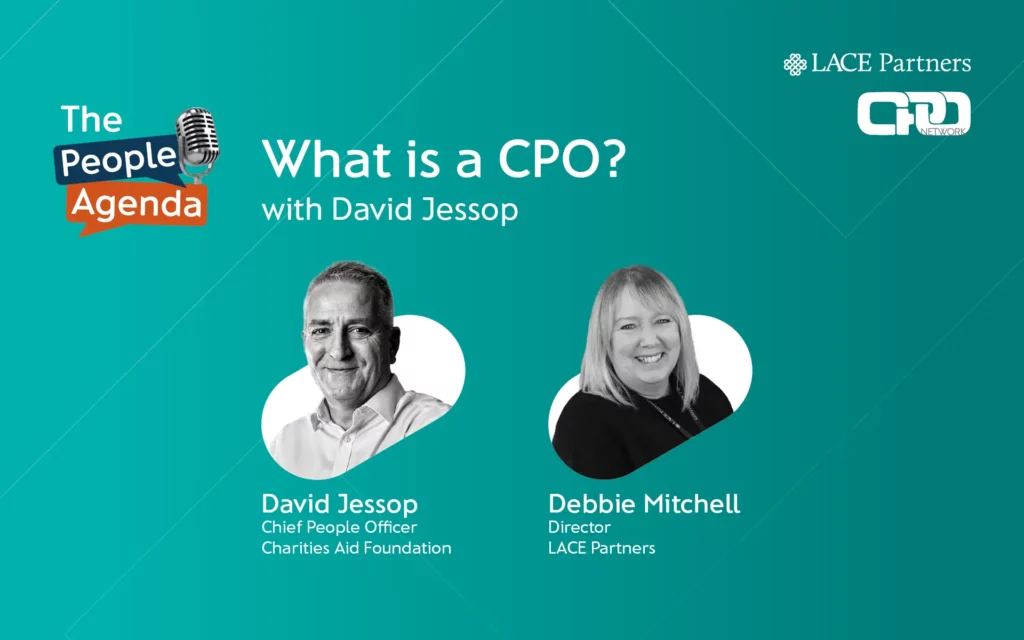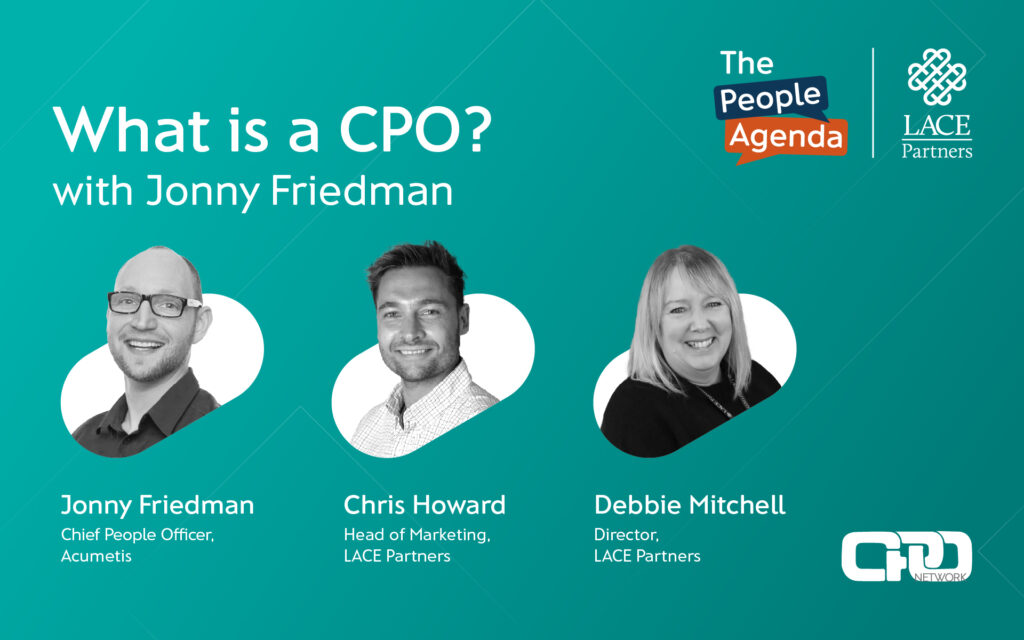
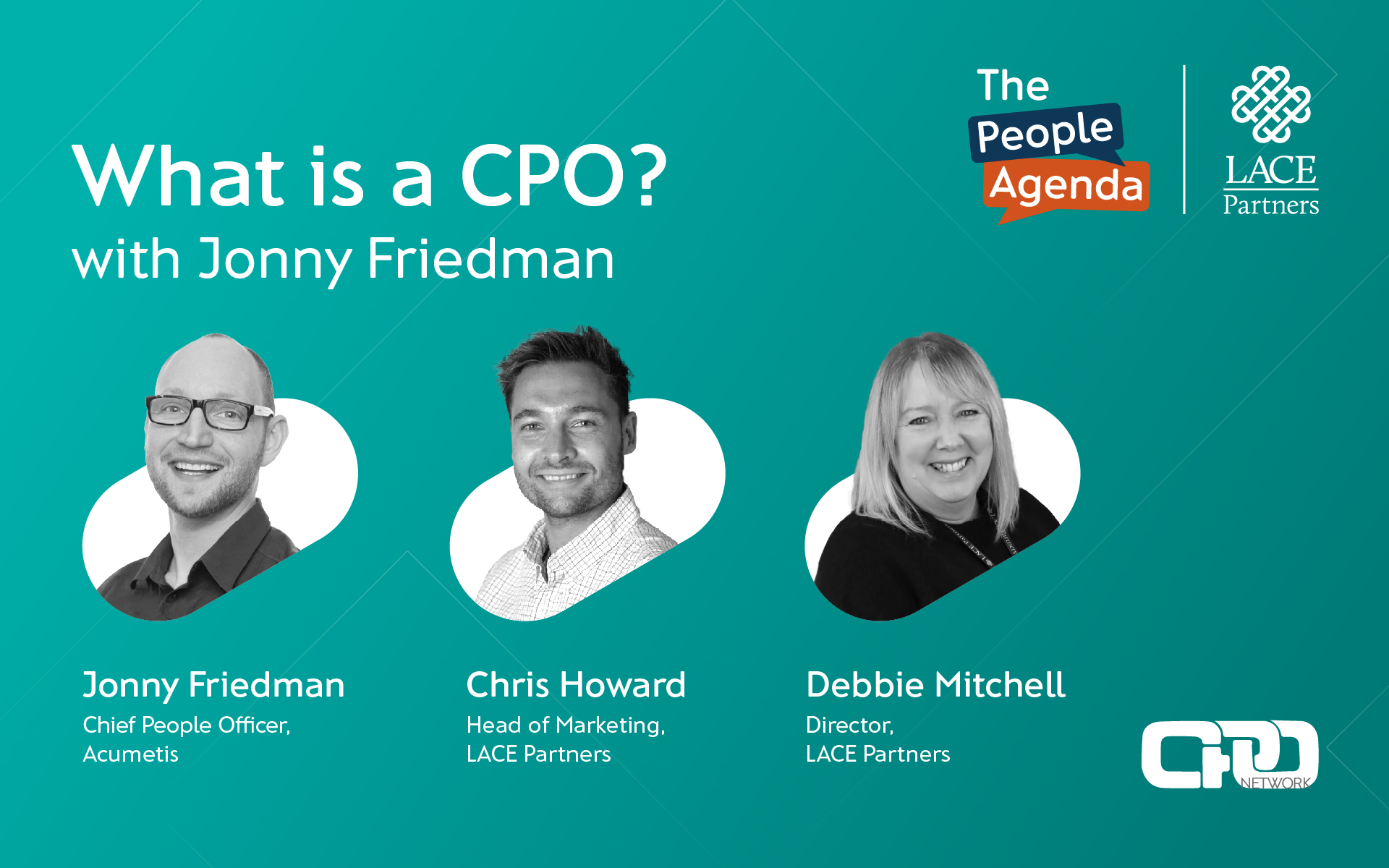
The modern Chief People Officer is no longer just a people leader. Today’s CPO is a strategic business partner, cultural architect, and organisational conscience. In this episode of The People Agenda podcast Chris Howard and Debbie Mitchell speak to Jonny Friedman, Senior Vice President of People and Talent at Acumetis, as he shares how people leaders can balance commercial performance, organisational transformation, and employee experience while navigating rapid growth and change.
What is a Chief People Officer?
Jonny argues that the CPO is the conscience of the business, balancing commercial goals with employee wellbeing and organisational culture. Their role includes:
- Acting as both a strategic advisor and servant leader
- Combining emotional intelligence with data-driven decision making
- Influencing stakeholders across the entire organisation
- Helping align people strategies with business objectives
- Ensuring employees can contribute effectively to the organisation’s mission
What challenges come with integrating multiple businesses?
Successfully bringing multiple organisations together requires balancing growth, culture, processes, and employee experience throughout the transition. It means aligning systems, ways of working, and contractual arrangements, while also helping people adapt to cultural changes particularly when moving from a family-owned business to a private equity-backed environment. Keeping employees informed, engaged, and supported throughout the process is key to maintaining trust and ensuring the integration delivers its intended outcomes.
How is Gen Z changing leadership?
Jonny believes that Gen Z is driving greater transparency, authenticity, and openness in workplace leadership.
- Around 35–40% of the workforce consists of graduates, master’s degree holders, and PhD-level talent
- Employees increasingly expect honest and direct communication
- Leaders are encouraged to listen more and rely less on hierarchy
- Constructive challenge is viewed as a strength rather than a disruption
- Organisations benefit when employees feel safe expressing ideas and opinions
How can organisations build a stronger culture?
Strong cultures are created when organisations combine shared values with clear expectations and genuine employee involvement. Leaders who encourage people to share their views and contribute to decision-making are often better able to build engagement and trust.
Practices such as reverse mentoring can also help senior leaders gain valuable insights from employees across the business, creating a stronger understanding of different experiences and perspectives. When cultural expectations are communicated clearly and applied consistently, they help bring people together around a common purpose, regardless of role or team.
What is human-centred leadership?
Human-centred leadership creates trust by prioritising authenticity, connection, and empathy during periods of change.
- Leaders openly acknowledge challenges and uncertainty
- Vulnerability is used to strengthen credibility and trust
- Employees are encouraged to bring their whole selves to work
- Community, belonging, and purpose drive engagement beyond compensation
- Strong relationships help organisations navigate complex transformations
How can leaders maintain culture during rapid Growth?
Leaders maintain culture by staying consistent, communicating clearly, and ensuring employees choose to be part of the journey.
- Not every employee will align with a changing organisation
- Cultural fit is as important as technical capability when hiring
- High-performing organisations recruit for character and behaviours
- Internal promotions help reinforce organisational values
- Leaders should focus on engagement rather than forcing alignment
What does it mean to be the conscience of the organisation?
The CPO protects the organisation by balancing employee perspectives, business priorities, and organisational risk.
- Identifies risks before they become larger problems
- Encourages difficult but necessary conversations
- Considers organisational reputation and leadership behaviour
- Represents employee perspectives without simply repeating them
- Balances people needs with commercial objectives
How is the CPO role evolving?
The role is shifting from a traditional “personnel manager” focused on policies to a strategic architect of culture and capability.
Jonny notes that 20 years ago, the role was reactive and often defined by what people couldn’t do. Today, the CPO must prepare the organisation to be “future fit” for the next decade. This evolution includes managing the impact of AI.
The key takeaway from this conversation is clear: successful CPOs create business value by putting people at the centre of organisational transformation. As businesses become more complex, the ability to balance commercial outcomes, culture, leadership, and employee experience will become even more critical.
If you’re interested in the future of people leadership, organisational culture, and the evolving role of the Chief People Officer, listen to this podcast episode and hear Jonny Friedman’s insights firsthand.