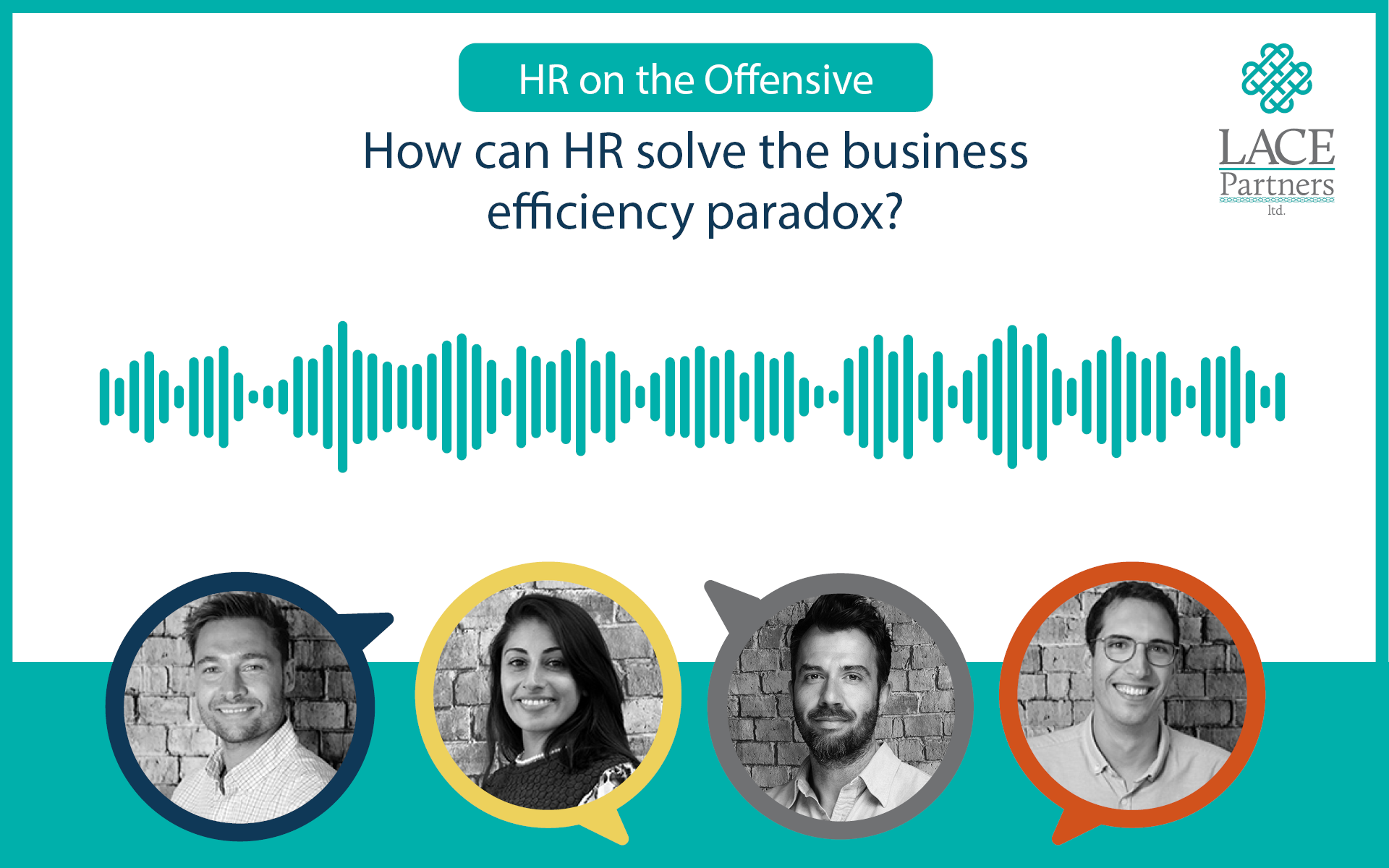
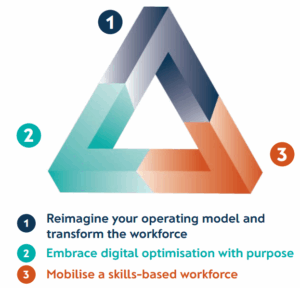
 In today’s evolving business climate, efficiency can no longer be synonymous with cost-cutting and headcount reduction. In our opinion, that’s an outdated view risks undermining both performance and resilience. In our latest whitepaper The efficiency paradox, we outline a three-step approach to tackling this problem. For this episode of the HR on the Offensive podcast Chris speaks with the authors of the whitepaper; Martin Colyer, Adam Morris, and Pavan Bilkhoo as they explore each step.
Step one – Reimagine your operating model and transform the workforce
The first area is all about rethinking how your organisation runs and reshaping the workforce.
Rather than defaulting to headcount cuts, it’s time to take a more considered, internal view—focusing on how to create real value. That means looking at how teams are set up, improving how work is prioritised, and making sure the right people and skills are aligned to what matters most.
HR has a big part to play here, stepping up as a key driver of change by using things like organisational design, workforce planning, and smarter service delivery to help move the business forward with purpose.
Step two – Embrace digital optimisation with purpose
Digital optimisation isn’t a magic fix—it’s a practical way to drive long-term performance. While digital transformation isn’t new, the rise of AI means it now needs to be approached more strategically. That starts with revisiting old processes, making better use of your data, and applying technology where it really makes a difference. If you’re looking for guidance on how to do this most effectively, take a look at our TRUSTED framework for AI.
Most importantly, any digital effort should support your overall service goals. It’s all about asking the right questions and being clear on the value you’re trying to unlock.
Step three – Mobilise a skills-based workforce
Building the right skills across your workforce isn’t just a task—it’s a way of thinking and a cultural shift for your organisation.
Start by identifying your top five to ten priority skills and making them visible across the organisation. Alongside this, give employees and line managers the tools and confidence to understand and talk about the skills they already have and those that they want to build.
Next, set up simple processes to match skills to the right work—even for short-term or part-time needs. This boosts adaptability and helps build a more open, collaborative culture. Learn more about the foundations of a skills-based organisation here.
Listen now for a brief overview of the three key areas of focus to tackling the business efficiency paradox. Download our whitepaper to learn how you can unlock more with what you already have.