In brief
- The Chief People Officer (CPO) aligns people strategy with business goals, maximising organisational performance by maximising people performance.
- Effective CPOs are commercial, expert in HR levers, and future-focused—using data and insight to drive measurable outcomes rather than following trends.
- Success for a modern CPO means building trust-based executive relationships, anticipating future workforce needs, and delivering value through responsible, credible influence.
Listen to this episode:
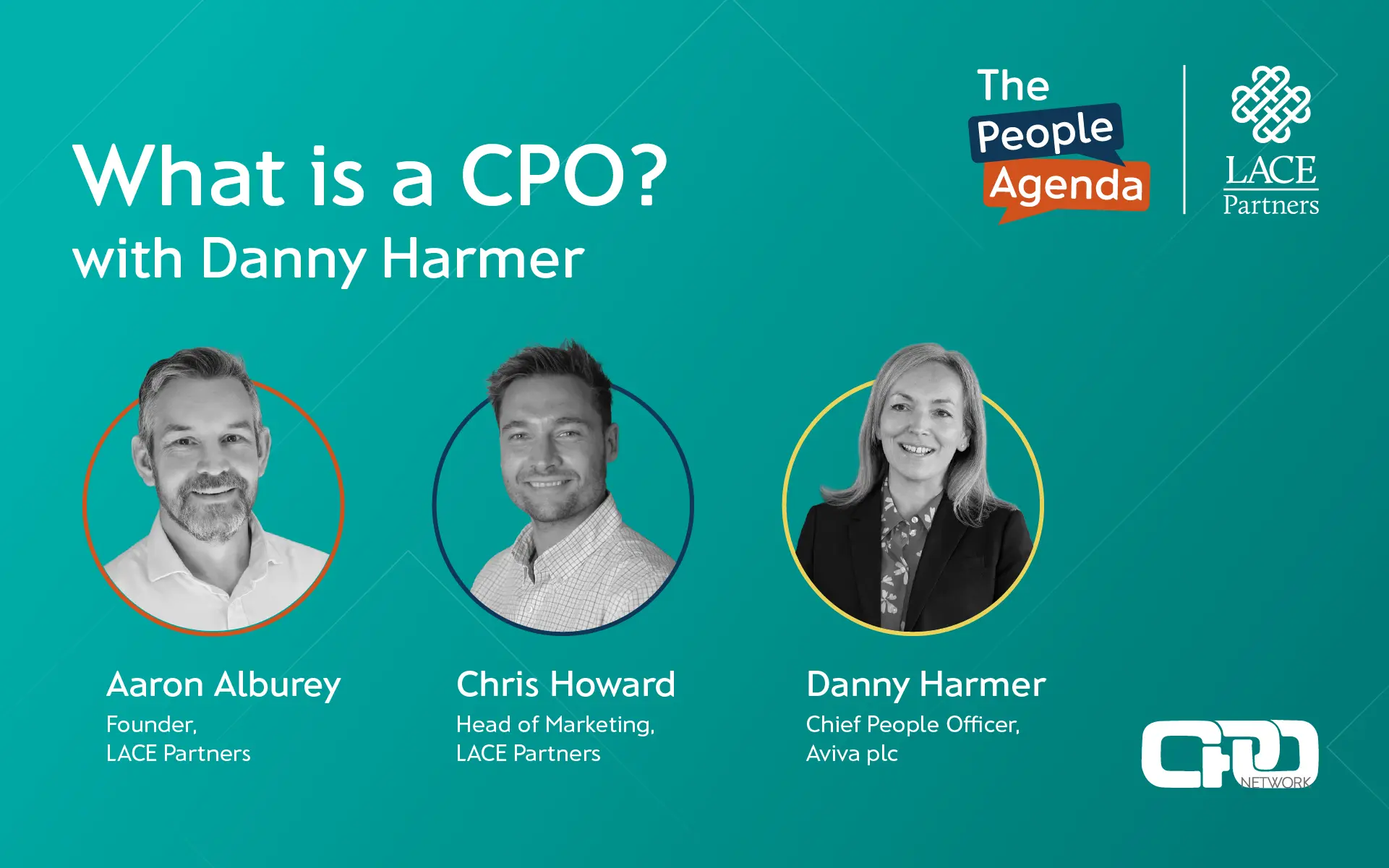
A Chief People Officer aligns all people in an organisation behind the company’s goals, ensuring the right skills, structures, and performance are in place. Guest Danny Harmer, Chief People Officer at Aviva, describes the role as maximising organisational performance by maximising people performance. Host Chris Howard and Co-Founder Aaron Alburey speak with Danny as part of our min-series, What is a CPO?
How does the CPO role differ by organisation?
It varies depending on the organisation’s size, maturity and workforce. Danny explains that fast growing or early-stage businesses need solid people systems that still allow room for agility. Larger and more established companies often must refresh the basics. The fundamentals need to work effectively before anything more advanced can be added. Large operational workforces often require entirely different HR approaches compared to smaller senior specialist teams.
What core principles drive strong CPO performance?
Danny highlights three core principles:
- Be commercial – understand how people decisions impact business performance.
- Be expert – know the HR levers that improve performance.
- Be future focused – anticipate how technology and work will evolve in the upcoming years.
These principles steer decisions away from trends and toward measurable outcomes.
How should a CPO support future workforce needs?
A CPO should facilitate conversation, provide insight, and supply data, not replace leaders. Leaders often “don’t know” or “don’t have time” to think long-term, so HR must frame the and propose practical solutions such as apprenticeships, outsourcing and reskilling pathways.
What relationships matter most for a CPO at executive level?
Trust-based relationships matter more than functional alignment. A CPO must hold sensitive information about peers objectively, confidentially and without misuse. Using talent or succession insights as political leverage undermines credibility and damages culture. Danny emphasises that strong CPO–CEO, CPO–chair, and CPO–RemCo relationships allow for mutual support and strategic alignment.
Has the strategic influence of CPOs increased?
It has as most organisations now treat people as core strategic differentiators. Danny notes that the “seat at the table” debate has largely faded, except in a minority of firms where HR is still siloed. She attributes influence to capability: CPOs must demonstrate commercial value and deliver outcomes, not activities.
What should change in the HR profession over the next year?
Danny argues the focus must shift from initiatives to outcomes. HR should:
- Slow down and start with business need.
- Use data to target small but meaningful adjustments.
- Stop swinging between extremes, such as radically changing performance management models.
- Anchor work in 3–5-year horizons rather than trend-driven reinventions.
What factors define a successful modern CPO?
A successful CPO:
- Understands commercial priorities.
- Delivers value through people systems.
- Anticipates future skill shifts.
- Holds confidential insights responsibly.
- Influences though credibility, not control.
- Builds sustainable organisational performance.
More on the What is a CPO? series:

Listen the series on Soundcloud: https://soundcloud.com/user-539831783/sets/what-is-a-cpo