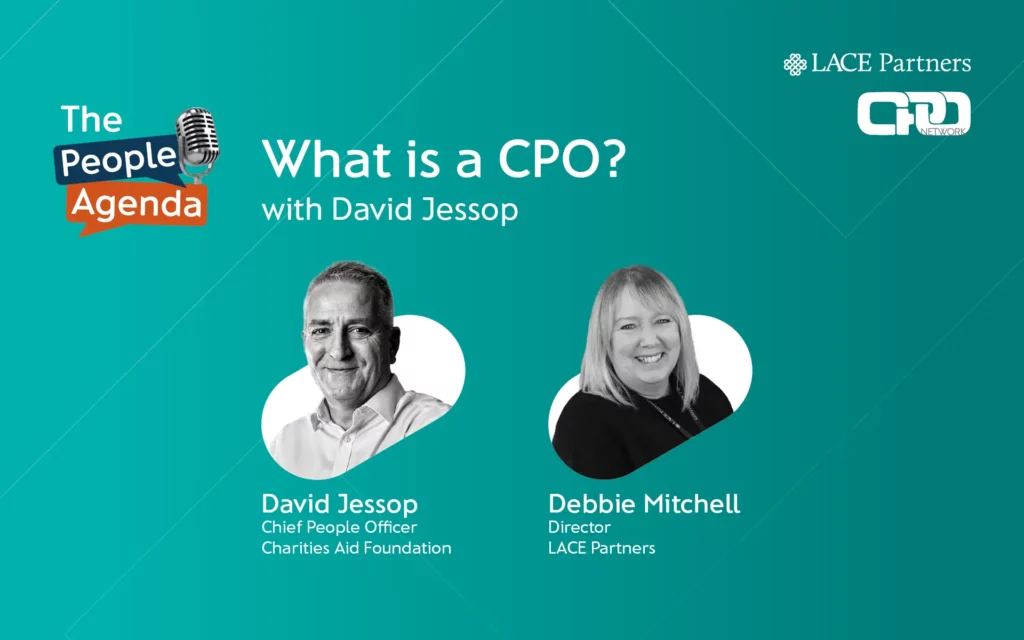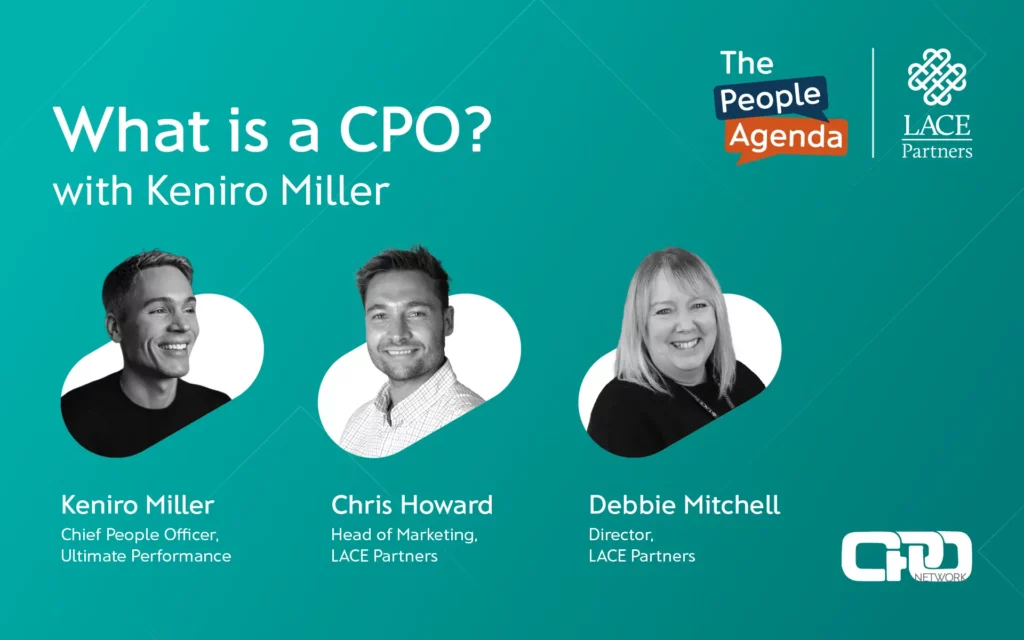
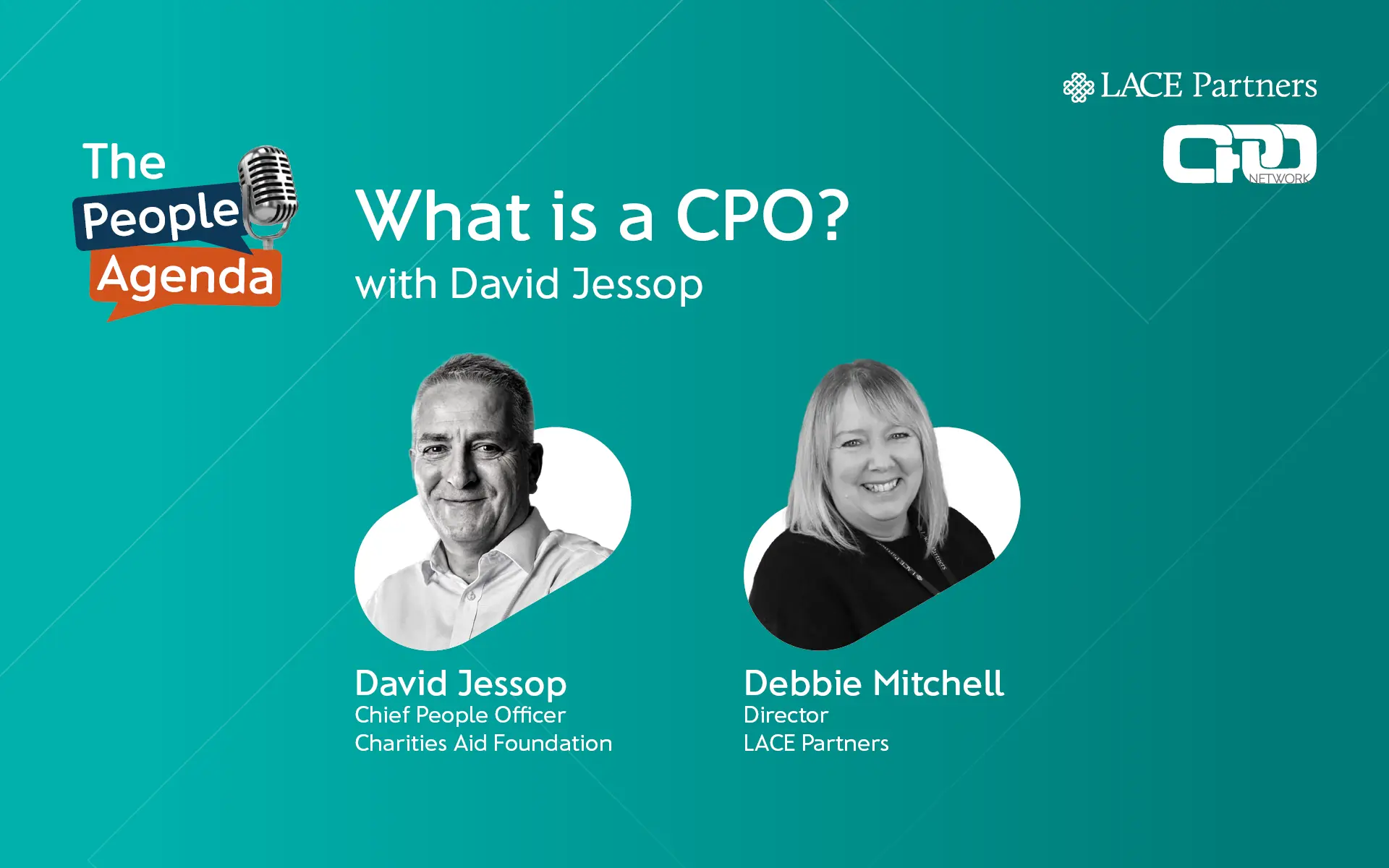
What does a chief people officer actually do when their organisation spans a UK charity, global philanthropy and a regulated bank? In this episode of What is a CPO?, David Jessop makes the case that purpose, not sector, is what holds a workforce together.
Host Debbie Mitchell opens with the question this series always asks. As she puts it, “everyone knows what a chief financial officer does” but what a chief people officer does “is very varied, depending on the organisation’s context.” David Jessop, chief people officer at Charities Aid Foundation (CAF), is this episode’s answer.
David has spent 25 years in the not-for-profit sector, the last 15 in the C-suite. At CAF, that means overseeing people across a UK charity, a for-profit bank subsidiary and philanthropic activity in North America, three entities, three regulators, one shared purpose. As David explains it, “a chief people officer is the role in an organisation that creates the conditions for people to succeed and perform.”
Listen to the episode:
Purpose over sector
David pushes back on the idea that charity work makes engagement easier. Purpose drives performance in any sector, he argues, commercial or charitable, as long as people can see how their work connects to it. At CAF, that meant bringing internal communications into the people function so the organisation’s story and its people strategy moved together.
The results speak for themselves. In 2020, CAF distributed around £650 million to charities worldwide. Last financial year, that figure reached £1.6 billion, nearly triple in five years. David traces that growth back to a one-line objective from his CEO: “build a winning team.” He unpacked it into a people strategy now in its third phase, starting with creating a psychologically safe workplace in the aftermath of the pandemic.
AI without the two-tier workforce
David is candid about where AI adoption goes wrong. The risk isn’t the technology itself, it’s the gap it creates. “If you don’t turn off and stop using some of the stuff you were using, you end up overloading people even more,” he warns. His approach: retire old tools as new ones come in, and make sure every part of the workforce is brought along together, not just the early adopters.
He’s equally direct about what the CPO role demands at exec level. Talent alone isn’t enough, he says, leaders need someone actively building the conditions for that talent to develop. And on the wider frustrations with how the role is perceived, David is clear: “you’ve got to be a major influence and a champion for creating that healthy organisation,” not just a voice in the room.
In brief
- CAF tripled its charitable distributions, from £650 million to £1.6 billion, over five years
- Purpose, not sector, is what drives employee engagement, according to David Jessop
- AI adoption fails when it creates a two-tier workforce, so bring everyone along together
Listen to the full episode to hear David’s take on succession planning, cross-entity regulation and what he’d change about how the CPO role is understood.